Hi! I am a recent graduate of Carleton College in Northfield, MN who will be spending the next 365 days abroad pursuing an independent exploration on the topic of food insecurity. My funding and support is through the Thomas J. Watson Fellowship for 2019-2020.
What is food insecurity? At its core, it is simply a lack of access to healthy and affordable meals. However, the issue is anything but simple and resides on a spectrum that ranges from limited food access to malnutrition.
In the United States alone, billions of pounds of fresh produce end up in landfills every year while at the same time food insecurity affects millions of Americans. I first became aware of food waste issues while working in commercial kitchens throughout high school. This interest led me to volunteer with the Food Recovery Network during college, which aims to minimize campus food waste while providing food for the immediate community. After four years of work, I began to understand the systems that function to minimize food need. However every community has varying resources, organization, and issues. Though only one state away, my tourism-fueled, sprawling hometown in ranch-land South Dakota would not have been able to support the same food distribution system as found in Northfield. I then began to wonder, “How do different areas of the world deal with this complex issue?” That simple question is what has driven this project forward to where it is today.
Throughout the year I will seek out those who help food insecure communities across the globe. By working with international organizations to local food pantries, I will try to understand how communities care for the health of their people by ensuring that everyone has access to food.
I have learned that food insecurity is present in every single community where it takes on different forms and often remains hidden from the public eye. It is not only “there” but it is also “here.” With this in mind, join me in learning as much as possible about this complex issue!
One broken laptop and three countries later, I’m finally able to recap what I’ve learned and experienced the past 3 months. (Thanks mom for the iPad, and many reminders! 🙂 I am just a few days away from halfway and can’t believe this year is already almost half over.
I wrapped up my time in Madagascar with CRS, learning the whole way through. I extended my time in the south, to the extreme surprise of my host family in Tana, to be able to see two important events: growth monitoring, and general food distribution.
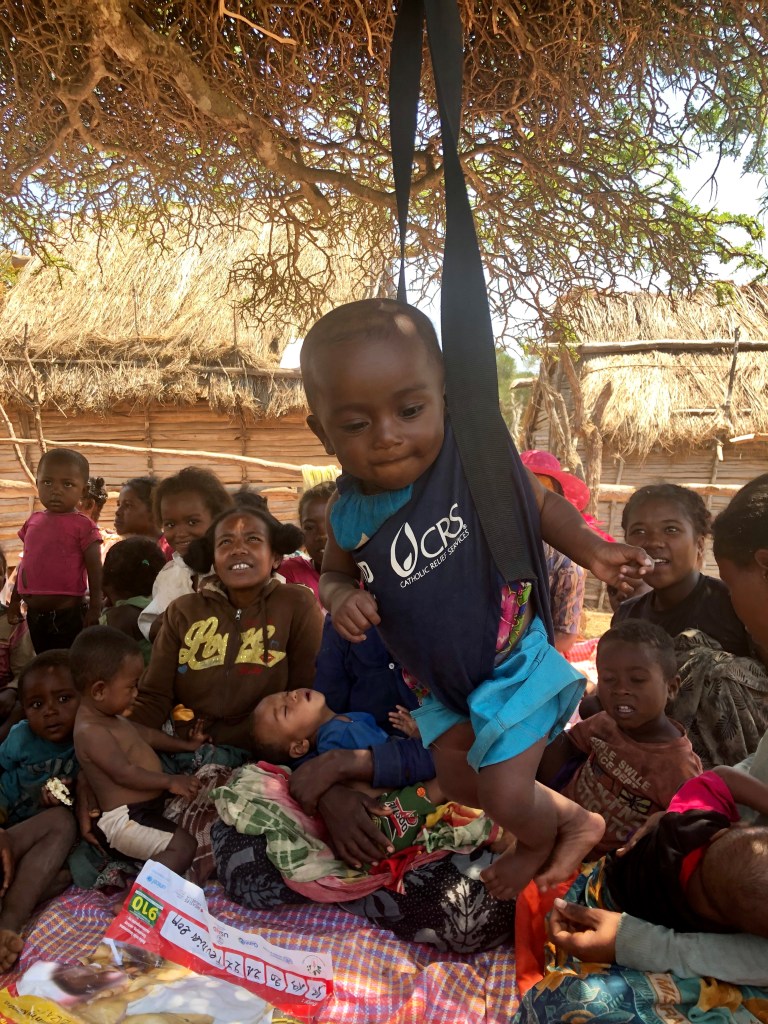
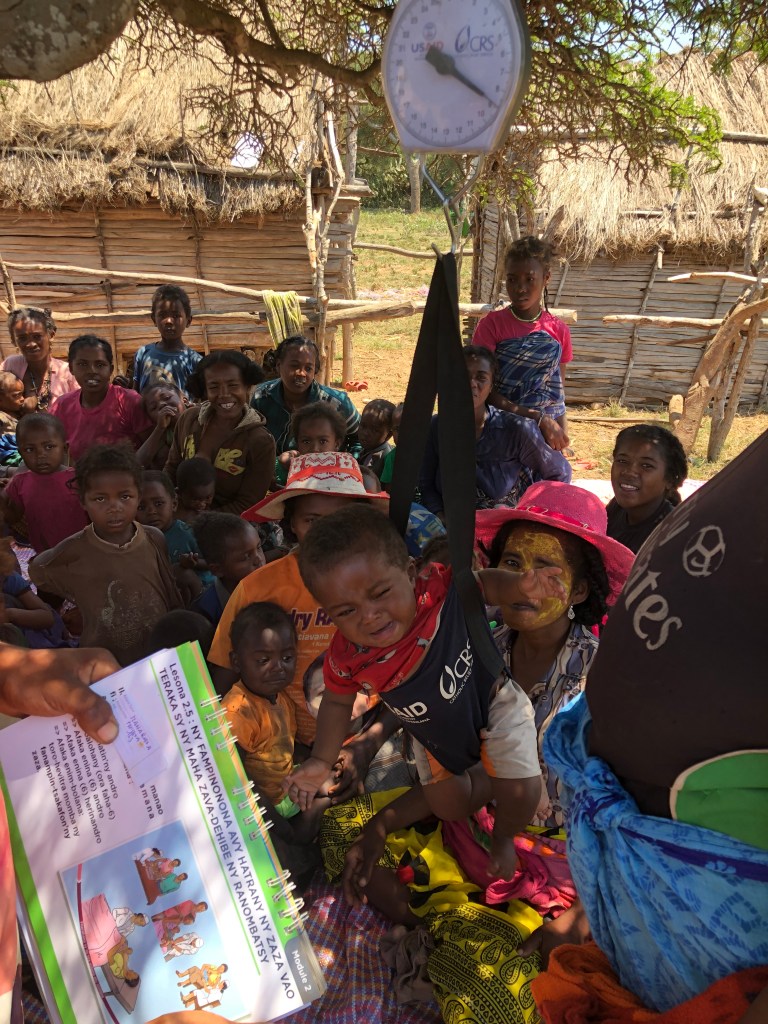
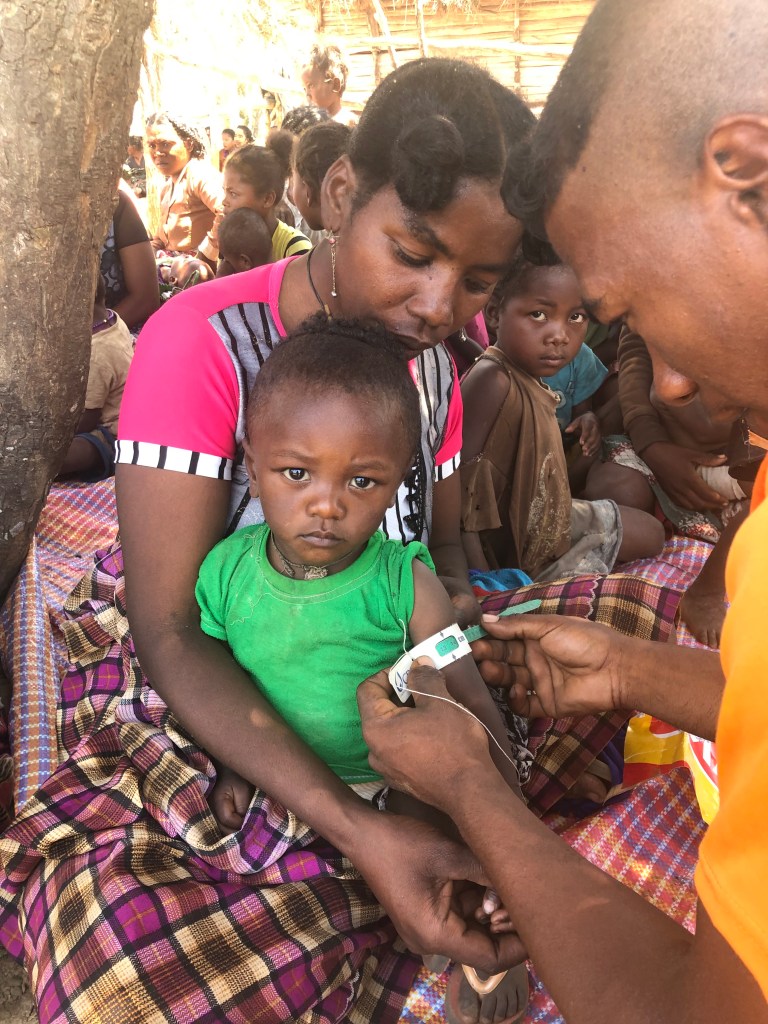
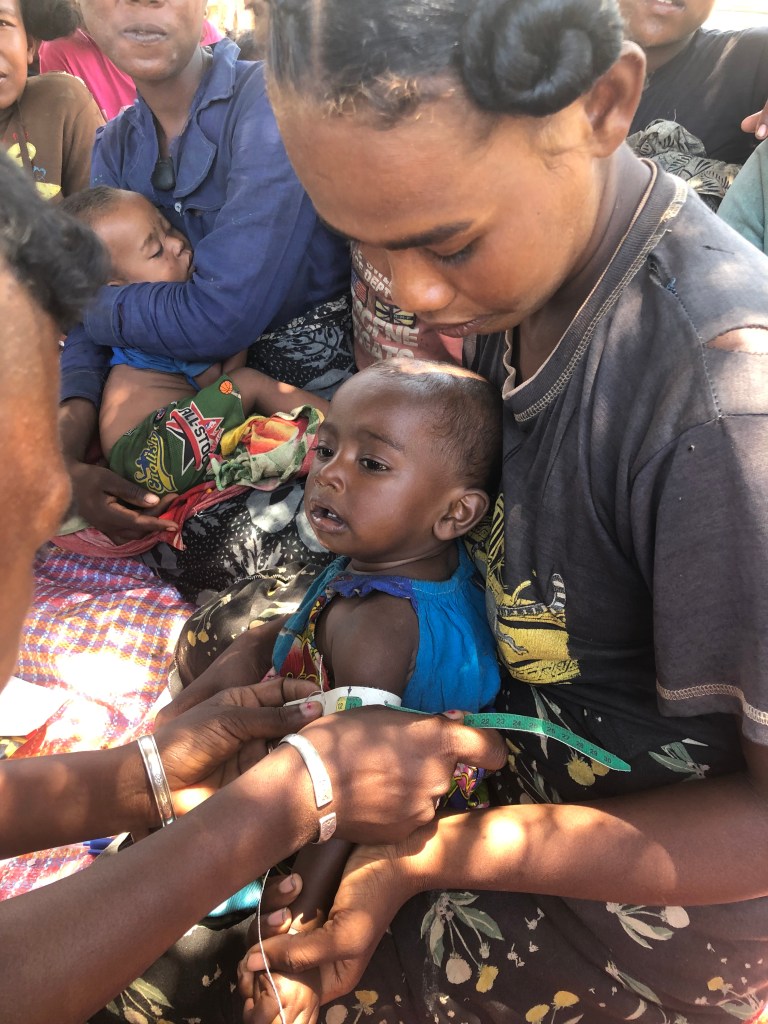
Growth monitoring is essentially a baby weighing, and is the cutest USAID—funded event you’ll ever see. They are hosted in one village at a time, where all women with babies congregate to have their measurements taken and recorded.
A few of the many emotions felt that day…
Any level of malnutrition among children is dangerous, as the loss of body fat and muscle tissues affects not only physical development, but also cognitive functioning later in life. Mothers who had at-risk children were separated from the others and counseled separately. In some ways, it seemed to serve as a societal incentive to keep your baby healthy, as this was all extremely public. I began to contemplate the concept of dignified aid, which is important to consider when looking at any assistance program. Does the experience inspire people, or make them feel small?
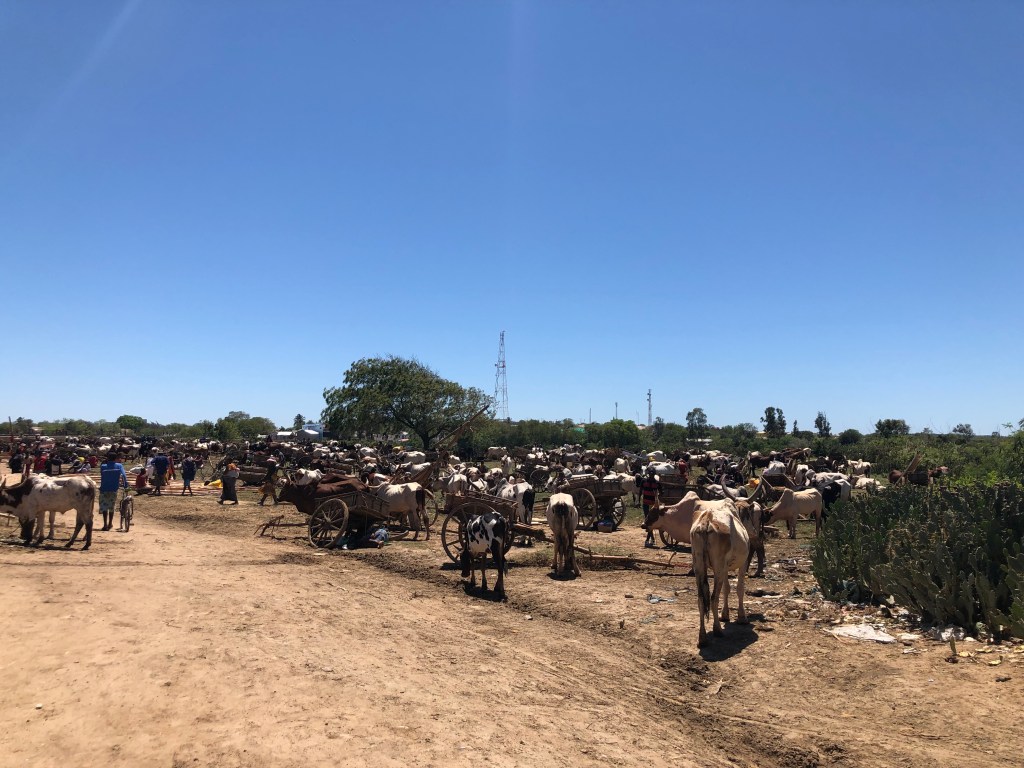
The parking lot fills up fast on market day!
This question is being asked all over the world. It has influenced soup kitchens in France, which provide 3-course meals and servers for their customers. It has altered the design of food pantries, so they look and feel more like a real store. Providing food is just one aspect of the equation. Making people feel respected through the process is equally important.
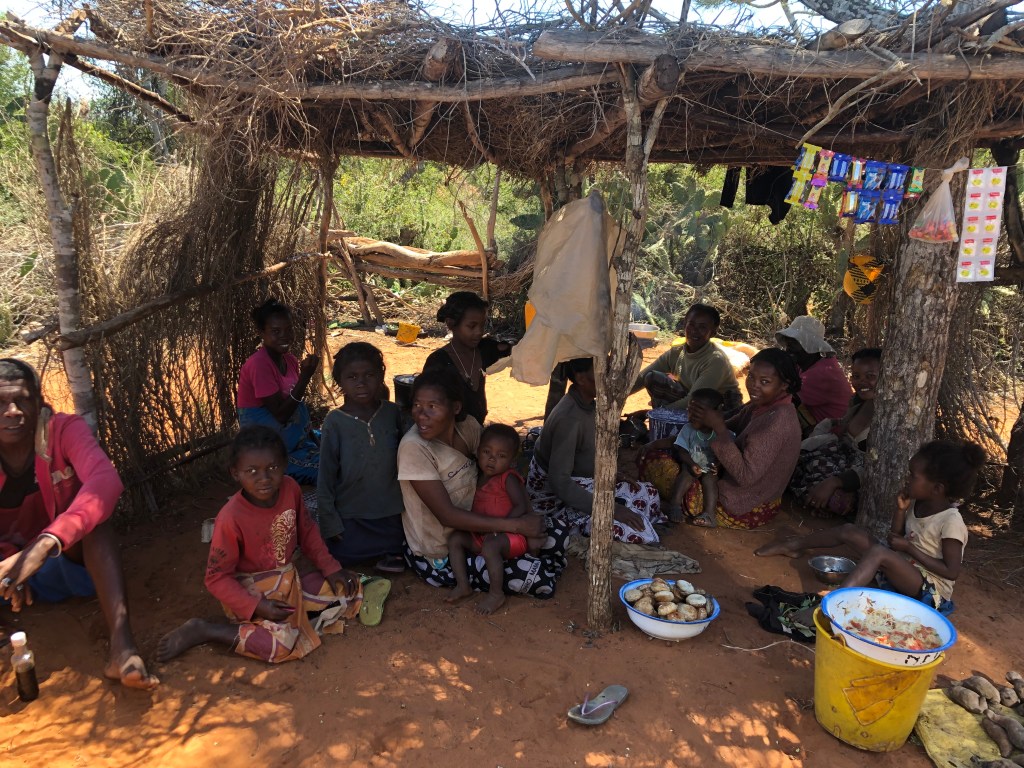
Roadside stop for snacks! These women serve coffee, tea, rice cakes, and sweet potatoes. It may not look like much, but it made all the difference when we were out of town all day.
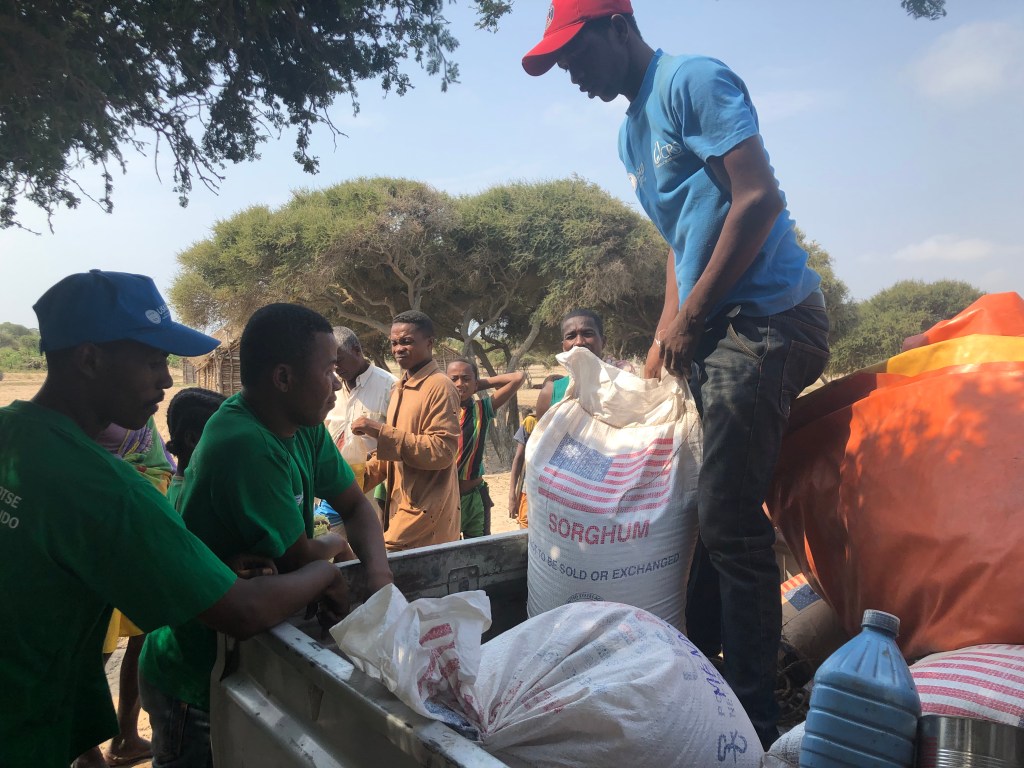
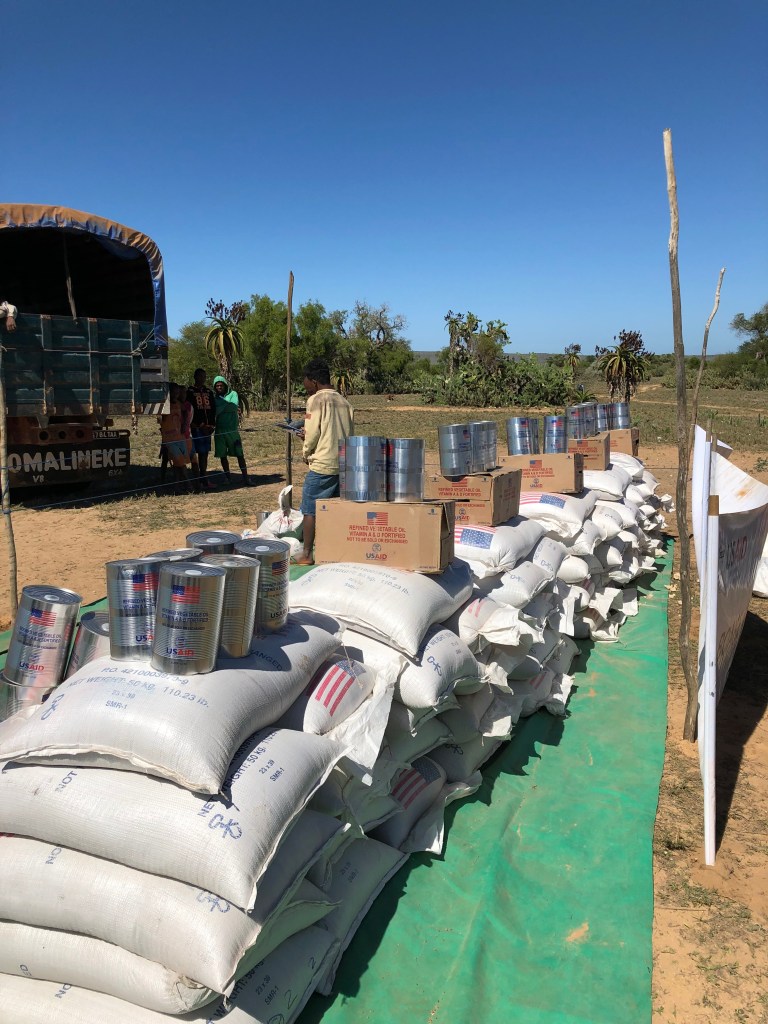
I contemplated dignity again as I accompanied general food distributions, which target only the most vulnerable households in each village. We would drive for hours to distribute bags of grains and oil to anywhere from one to eight families in different villages. Our arrival was never discreet, bringing out almost everyone from the village, and it was obvious who was receiving the food. However, there seemed to be little stigma associated with it. In fact, often other families would explain that they themselves had a need for more food and would like some as well.
I began to realize that the concept of dignity is situationally influenced. In southern Madagascar, where everyone lives well below the poverty line, dignified food assistance has an entirely different meaning than what I am used to. Dignified aid there, at least according to NGO guidelines, involves providing water at events and making sure there is adequate shade on site so people don’t wait in the sun.
The difference between a family who receives assistance and who doesn’t is often the ownership of a few goats, or a zebu. During the next lean season, that family may have to sell their livestock to their neighbor, only to purchase more again when they harvest. Everyone is basically in the same boat, some just have stability at different times.
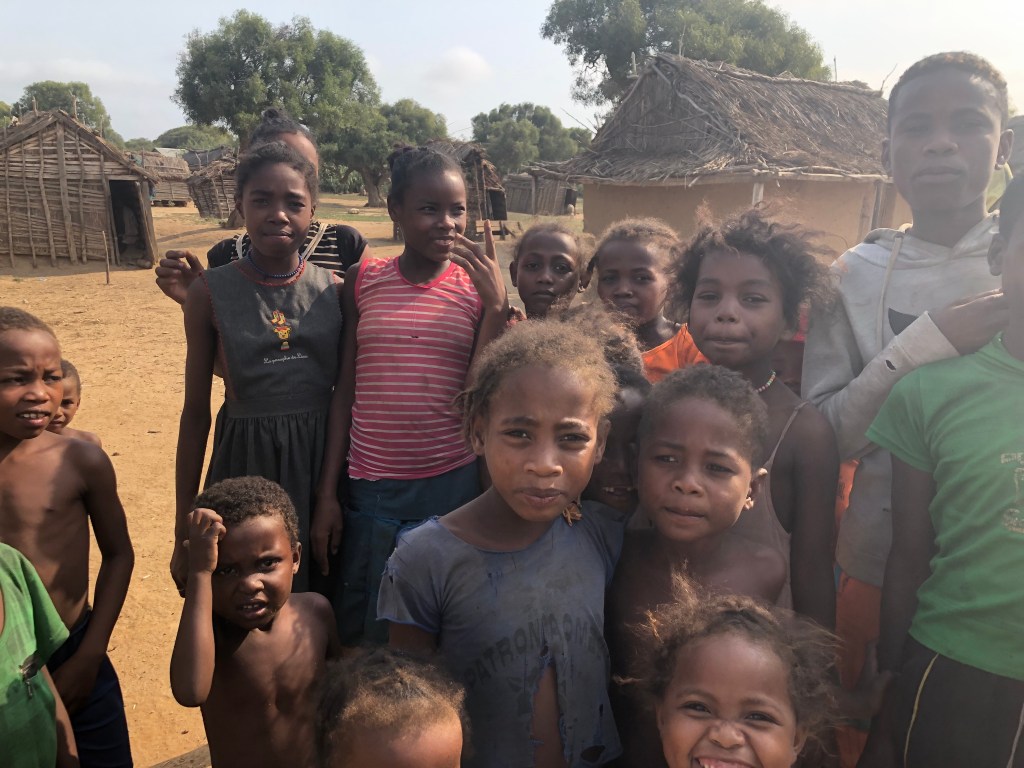
What’s going on?! Kids coming to check us out as we deliver food to their village.
What is considered to be “dignified” is also culturally influenced. A huge part of maintaining dignity in the USA is prioritizing privacy. In contrast, Malagasy communities (in the southern region) are very open, especially in small villages. I experienced this even in Beloha. There was one man who would always ask for money in the streets- his hands were cuffed together with a metal wire- and many people would donate their change. I later found out that he has mental health issues and tried to harm himself. The community bound his hands and collectively takes care of his needs.
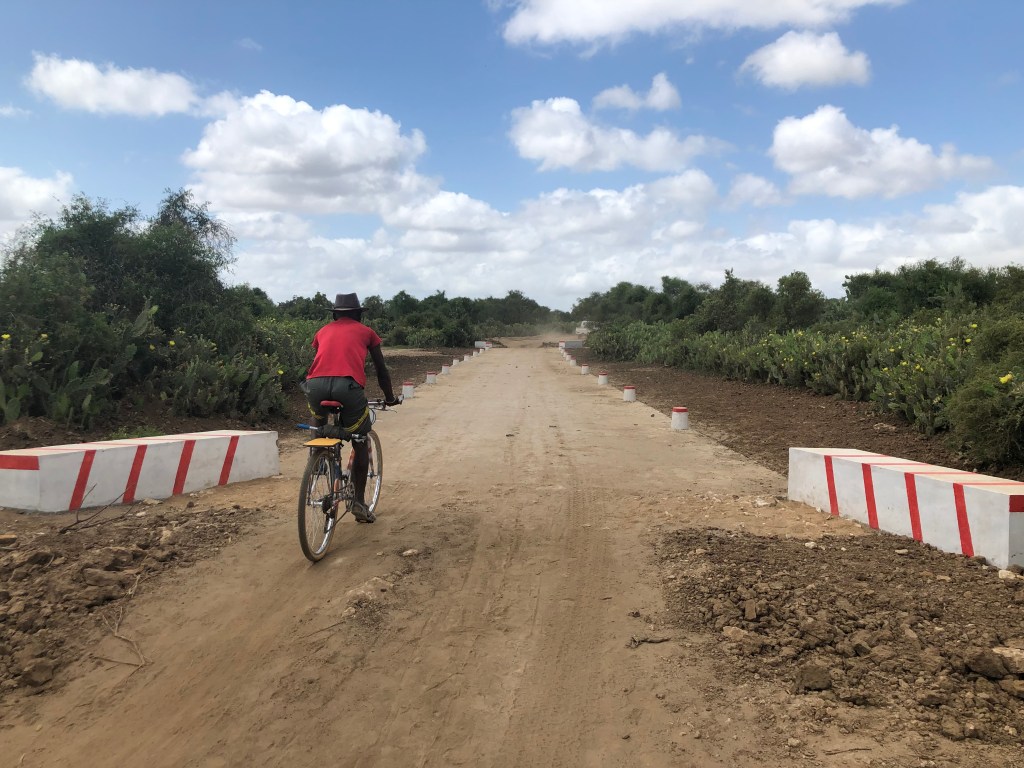
Road repaired by CRS, in preparation for the rainy season.
There is a Malagasy saying that is akin to “the circle of life.” It applies to many things, including wealth. It means that you might be on top now, but later you’ll be at the bottom, and those who are at the bottom now will be on the top. This cyclical visualization of prosperity is very different than the one-way ladder of the American dream, and could be one reason why there is far less stigma around receiving assistance.
My first day back in Antananarivo I ate an entire bag of oranges. Just two months of living in Beloha had taken a toll on me, as rice, meat, and potatoes are the staple food items. Regardless, I am so glad that I got to fully live the experience. I loved my simple life in Beloha, and left amazed at how quickly you can adapt to anything when you try.
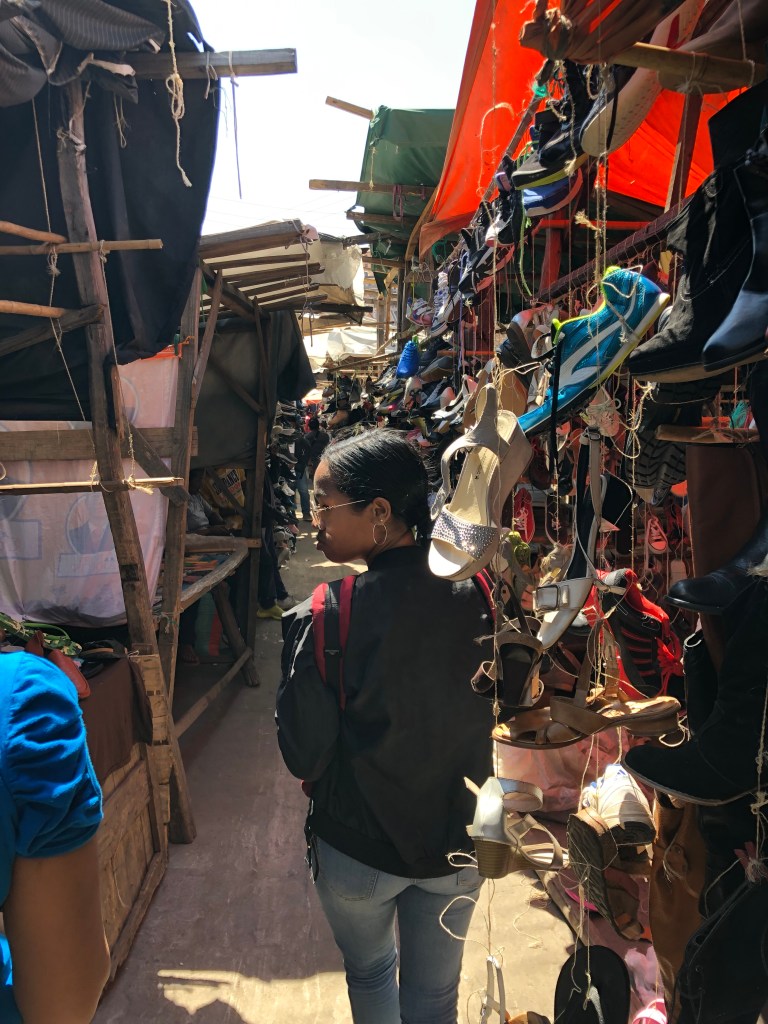
Shoe market and Antsa, my trusty guide.
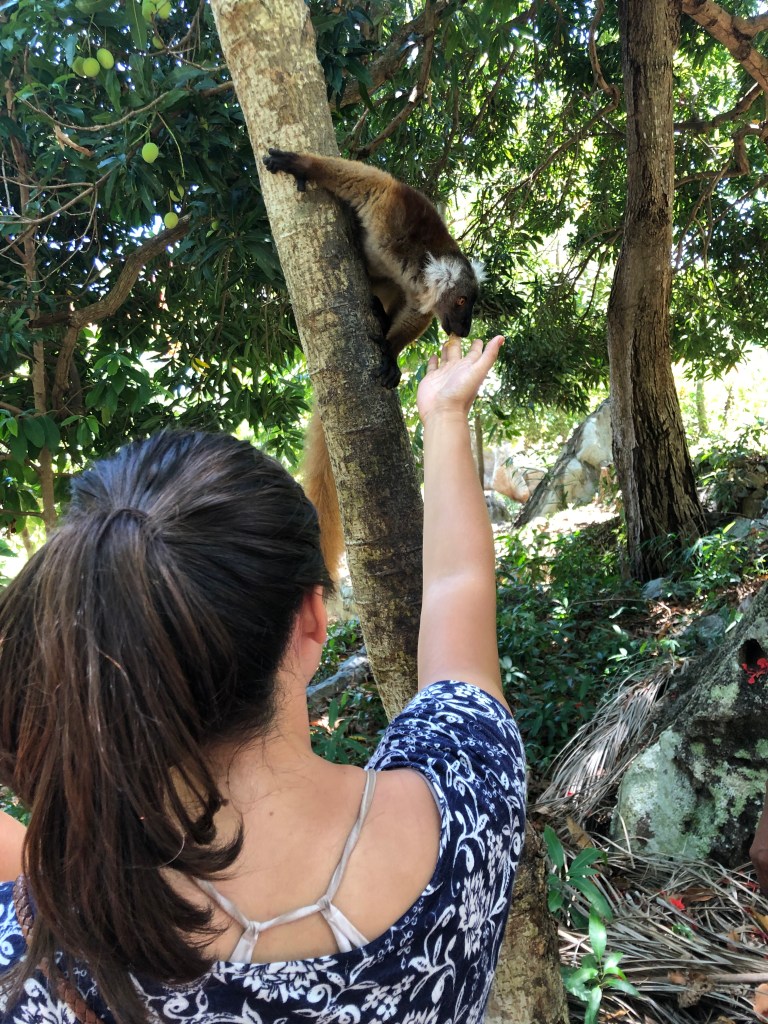
During my last week in the country, I spent a few days at Nosy Be, an island directly off the coast of Madagascar and the most popular destination in Madagascar. I was happy to finally be walking on sand, while on a beach instead of town…
One of the most difficult parts of this fellowship so far has been saying goodbye. So many people in Madagascar showed me kindness, and some I will never see again. But as a CRS staff reminded me, “the world is round, and the world is small.” I’ll definitely circle back someday. I am so thankful for the inspiration I gained during that portion of my fellowship. Veloma, Madagascar!
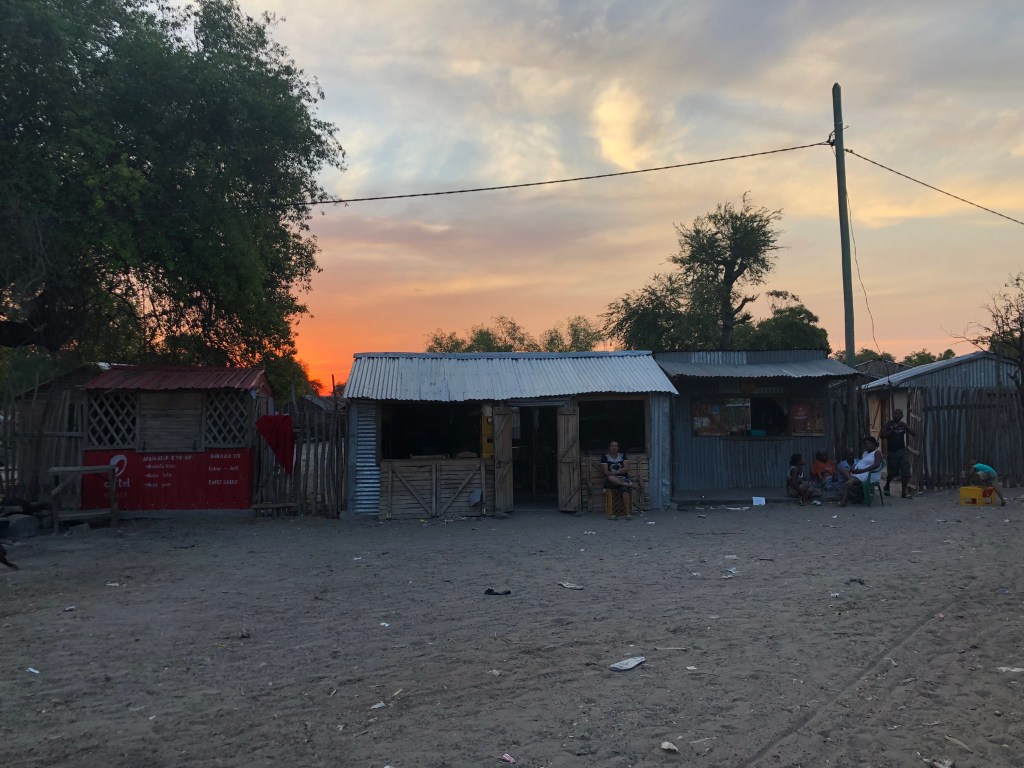
It’s almost November and summer is just kicking into gear here in the south of Madagascar. Today is 90 degrees and will be the coolest day of the week. Every afternoon the town is quiet, sleepily roasting, until about 4 pm when it starts to cool down again. Then kids come out and play basketball, foosball, and bocce ball, people mill back into the streets, and music percolates through the town again.
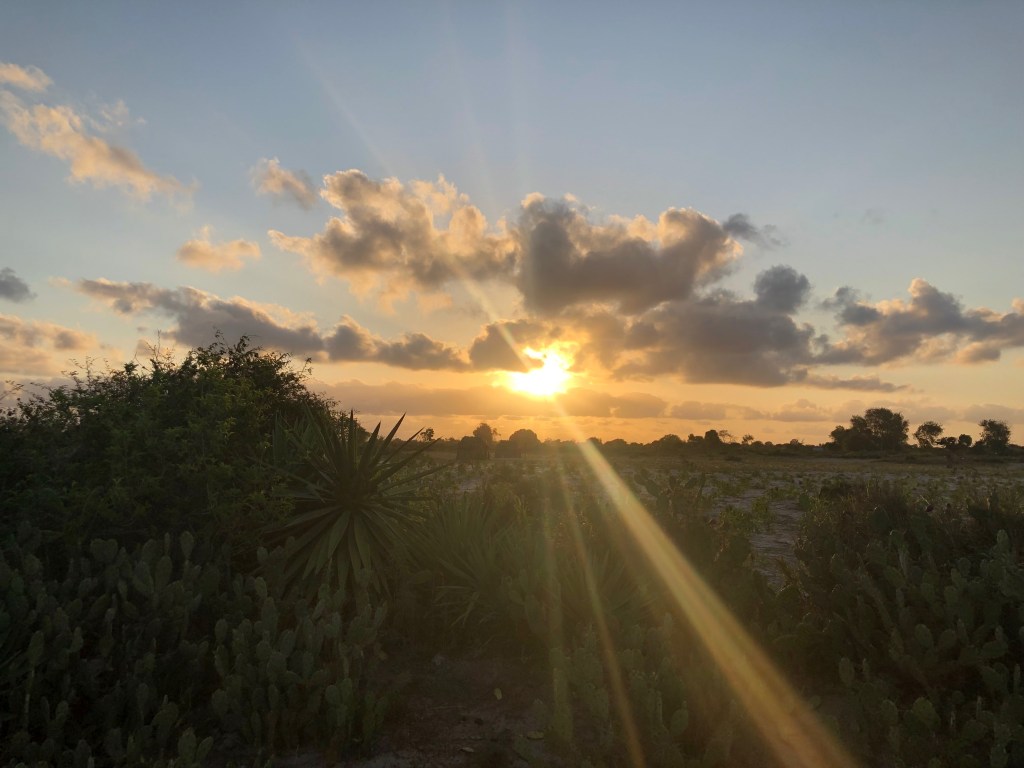
The best part of the day
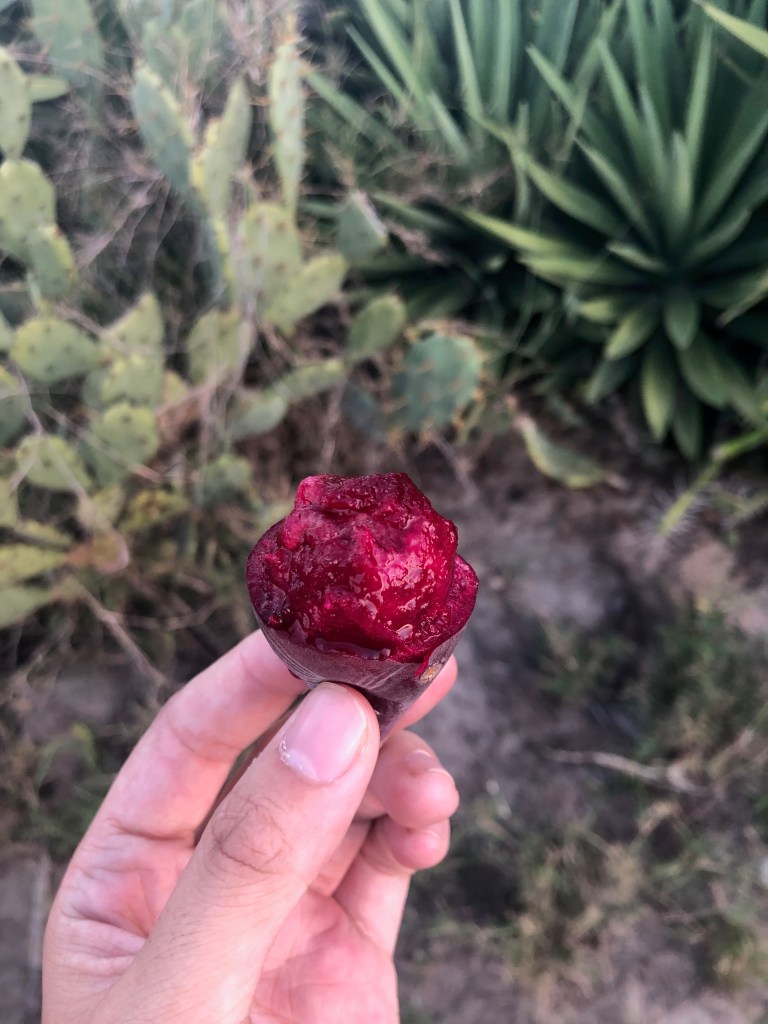
I’ve done a lot of project-related work since last writing. I’ve also done a lot of living! I’ve eaten lots of red cactus, which is tart and so good. I learned how to shop at the market by myself. I swam in the Indian ocean. I bought a chicken off the road and sort-of helped cook it. I survived travelers sickness (again…).
I also taught English for about a month, which was a great experience. The class was every afternoon from 4-5:30 pm, and the students ranged from 10 year old girls to 32 year old men. The people that came were some of the most dedicated learners that I have ever met. Teaching made me realize how lucky I am to know the most universal language in the world. So many people around the world work to learn English to better their opportunities. It felt great to help these people, in the south of Madagascar, a tiny bit along the way. And now I automatically have friends and people I can have simple conversations with in the street.
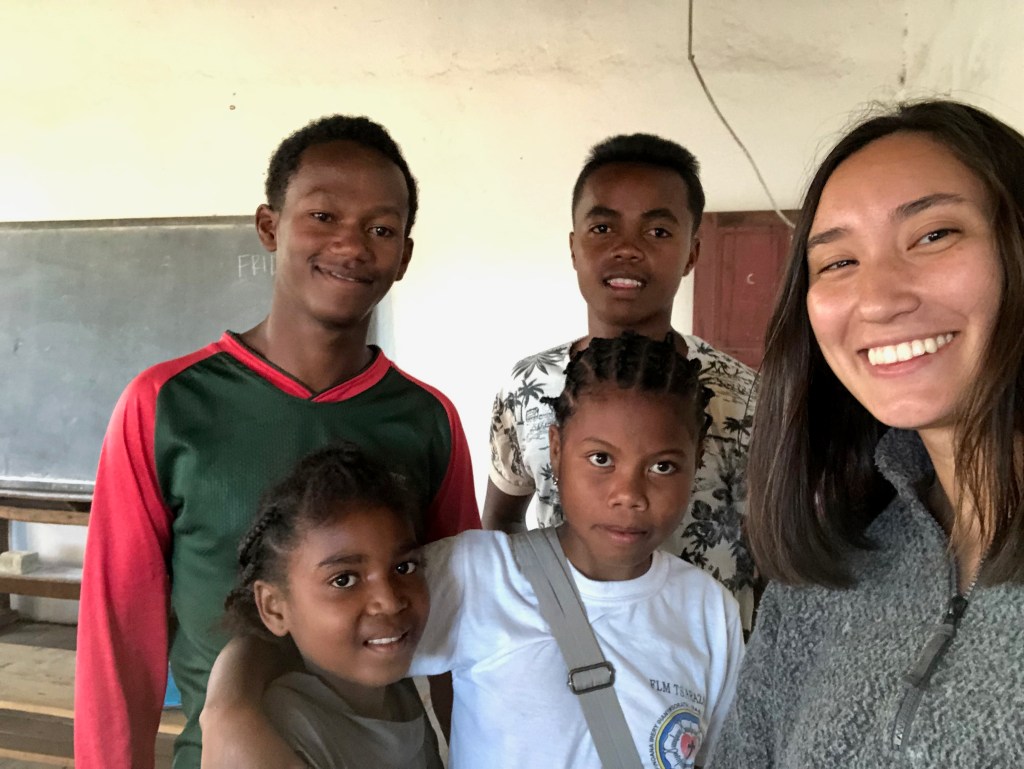
A few of my awesome English students
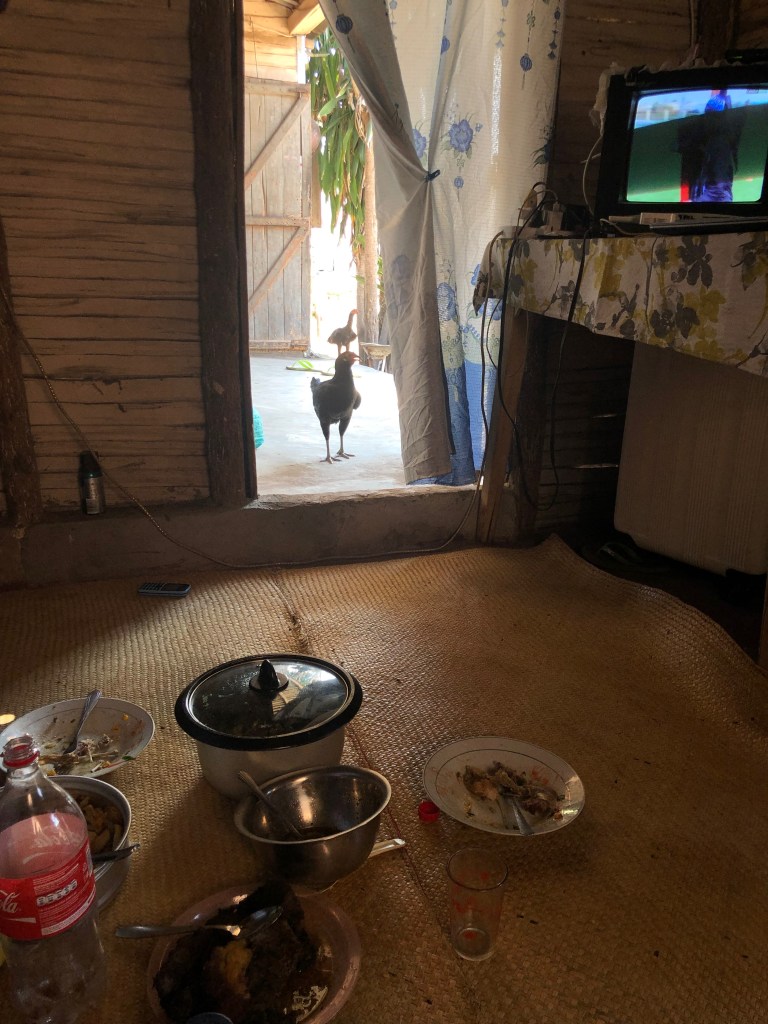
A neighborhood chicken waiting for a dinner invitation
I also have gotten to see some amazing work.
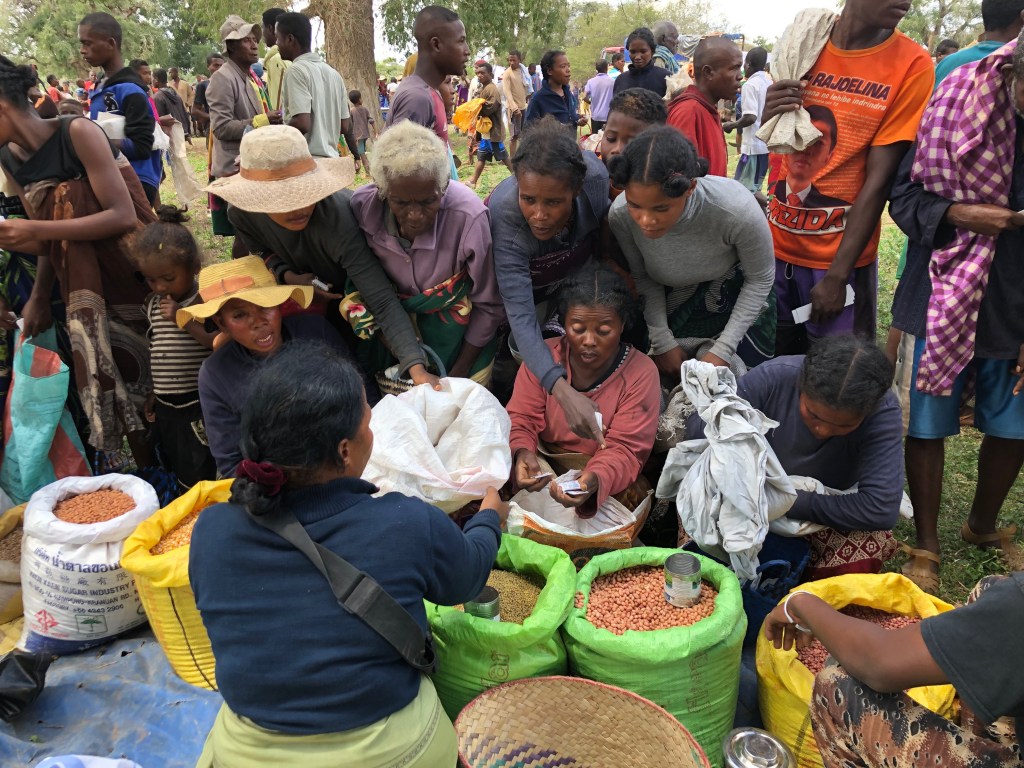
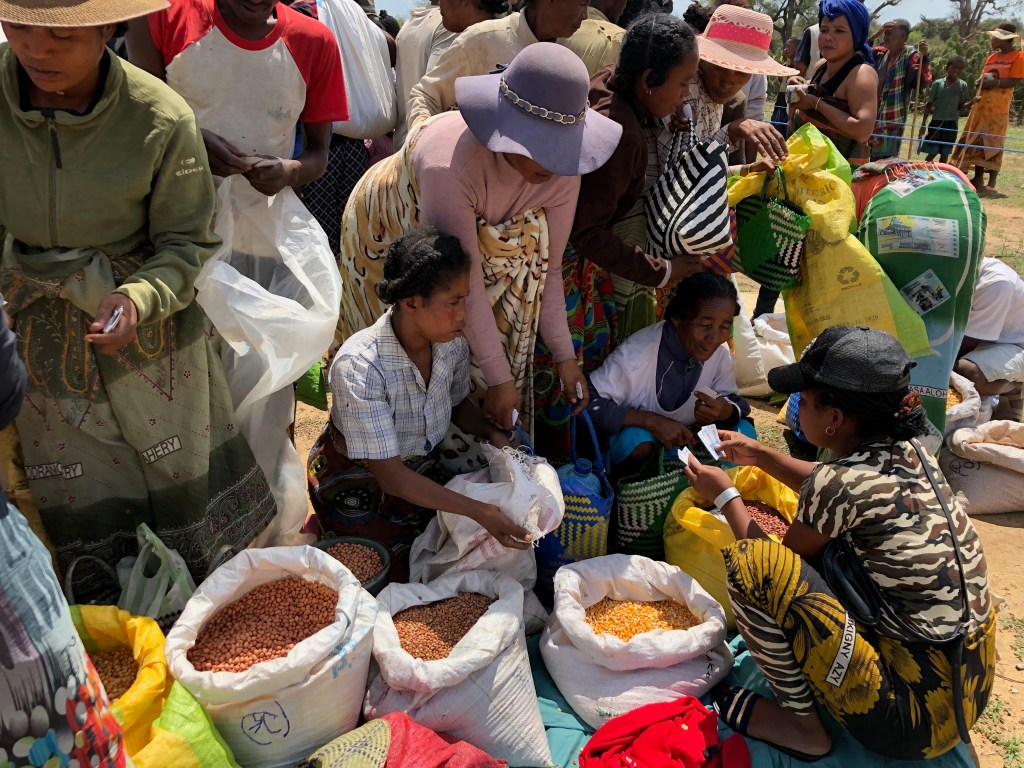
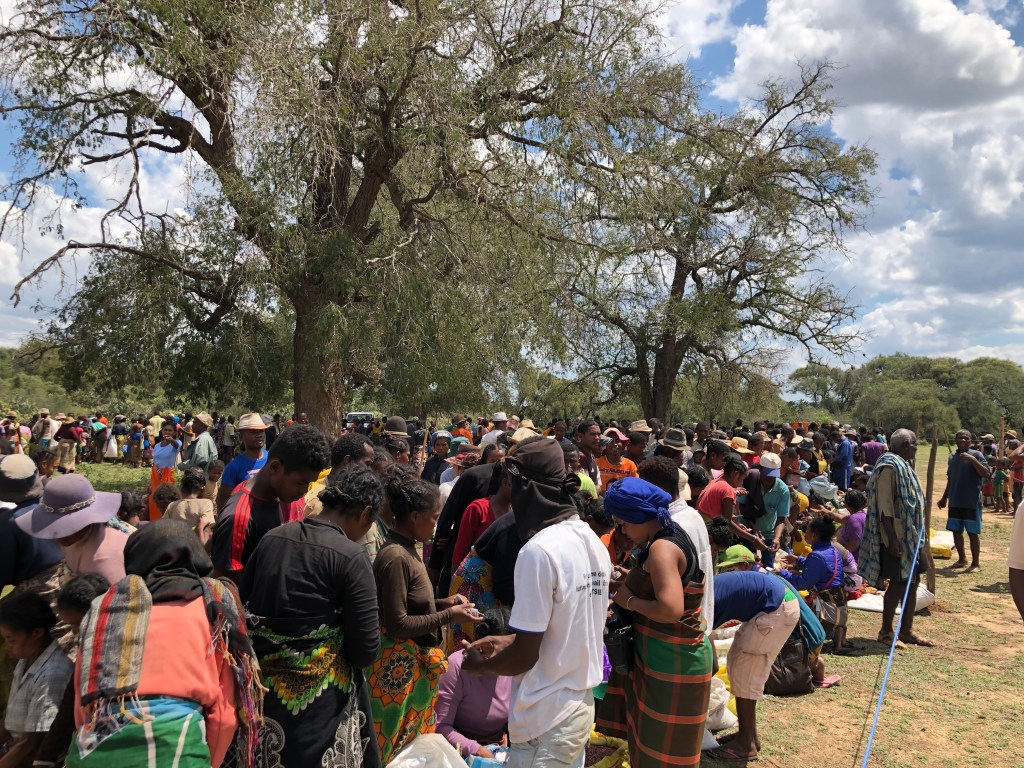
I’ll first tell you about the seed fairs. What is a seed fair? This picture basically sums it up:
Farmers here have a tough time. Global warming is causing the climate to become even more arid, making farming here more difficult than ever before. Harvests are often small and unpredictable, and cannot sustain families through the lean seasons when little grows to sell or eat. This situation has created an “emergency” state, as hunger and malnutrition levels require immediate action.
On top of the environmental issues, markets are very difficult to reach to purchase seeds or tools that farmers need. Roads are truly terrible in the south, and transportation options are slow and also terrible. Remember the 140 mile trip that took me 8 hours by car? In a taxi-brousse, these giant cargo vans that are the only options for travel here, transportation that everyone else has to take, this trip takes anywhere from 1-1.5 days. A zebu-pulled cart might be faster, which is the main method farmers use to transport their crops to the market after they harvest.
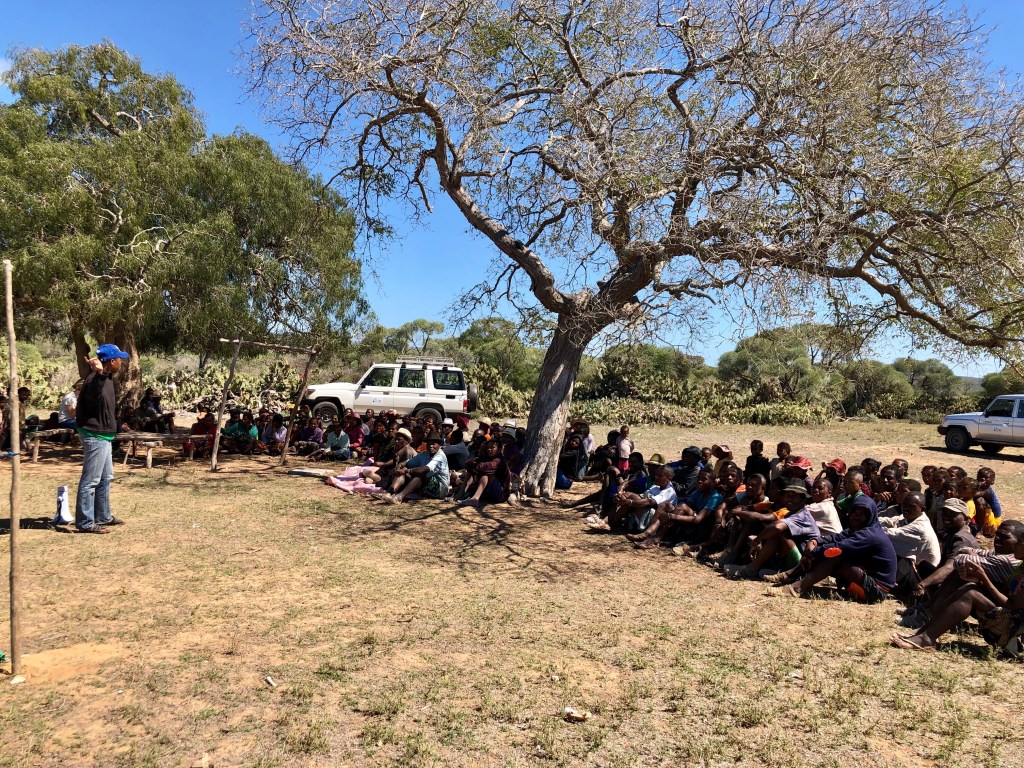
This is why CRS hosts one-day seed fairs, which brings seeds and tools to 24 remote locations. 400 people participate in each fair, so about 9,600 people will benefit from this round of fairs.
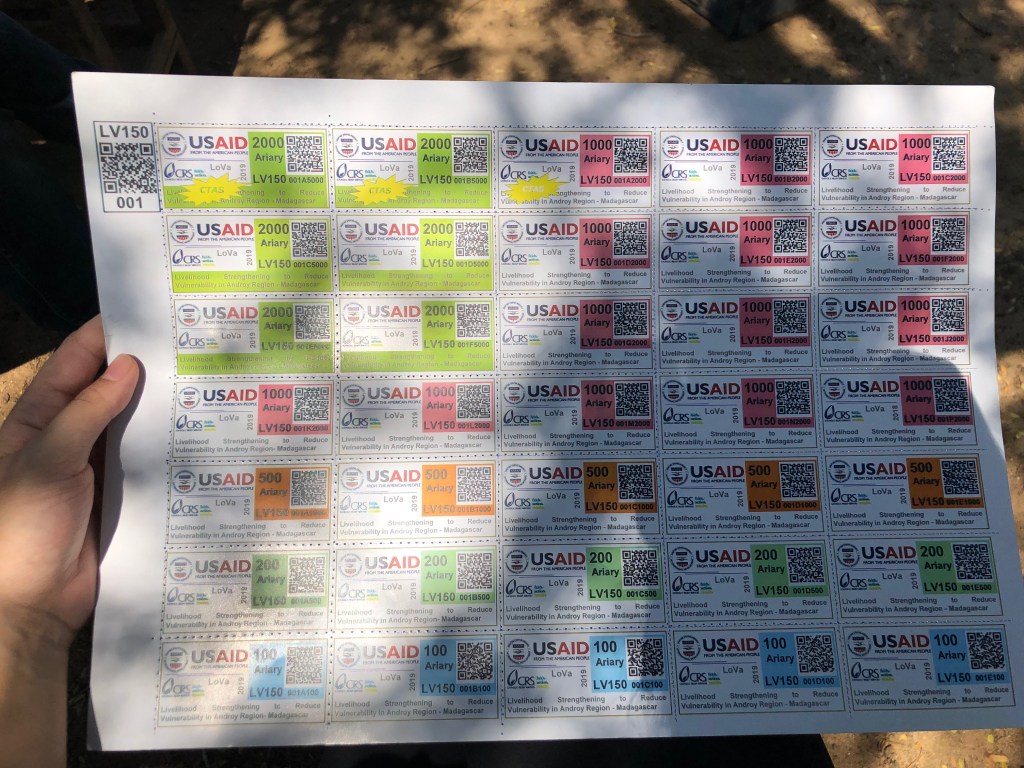
400 people patiently waiting to get processed for the fair (left) Seed fair vouchers (right)
Each participant receives a sheet of vouchers that equal 30,000 Ar (about $8). CRS transports seed (and some tool) vendors out to each location. The vendors set up in a large square and sell their products in exchange for these vouchers in a loud and intense hour-long period.
In the end, farmers get some of the seeds that they need for free. And vendors get paid by CRS in exchange for the amount of product they sold. It really is a win-win. The only people that lose are the CRS staff who have to individually count every voucher at the end of the fair… 🙂
People going home with their seeds in tow
Have you ever had to worry about a sand dune migrating onto your house?
Here in the coastal regions, sand is a major concern. Strong southerly winds are constantly moving sand inland each day at low tide, when large areas are dried and exposed. These sand dunes can shift and migrate suddenly, forcing people to abandon their homes or farmland as there is nothing within their power to do once it has. People spend hours moving sand away from their homes or land manually, but at some point they have to give up and relocate. Now landless and displaced, you can imagine how much they struggle.
For CRS, I am documenting the stories of two communes dealing with this issue. In the commune of Marovato, sand was shifting onto a well that provides water for three different villages. The people would spend up to seven hours just getting water, having to clear sand away from the well each time. In Anjampaly, sand migration has force entire villages to relocate. Massive sand dunes are constantly threatening to cover farmland as well.
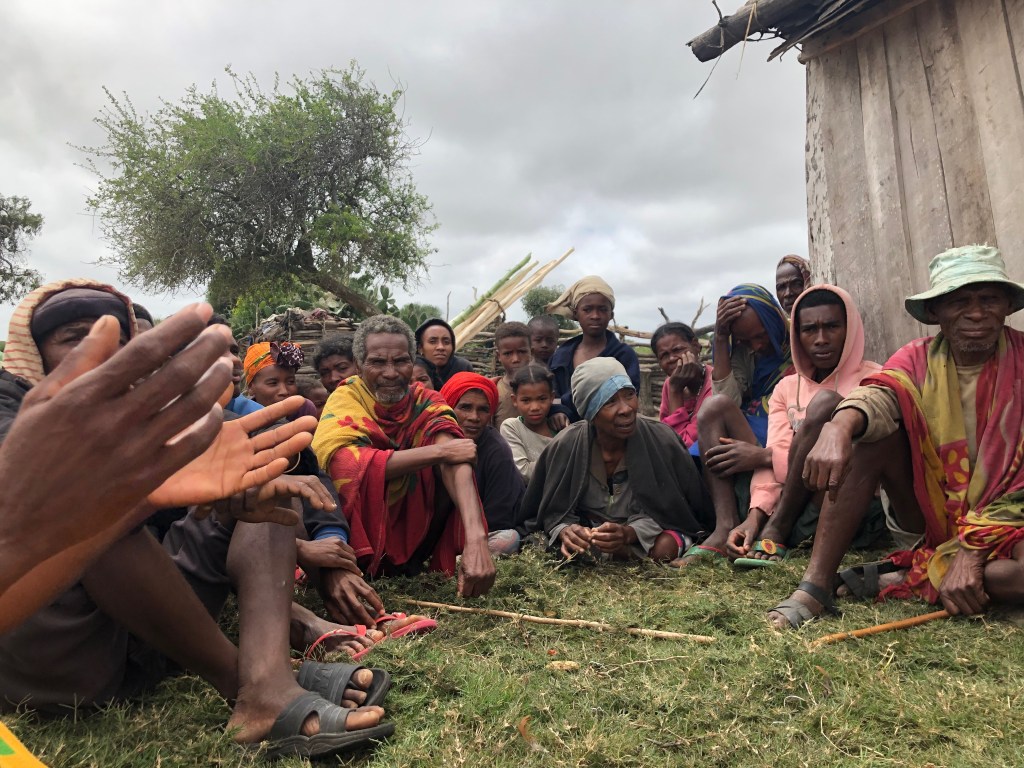
A village in Maravato discussing how they used to move sand manually to reach their water source. They are also concerned about sand encroaching on other locations near them and asked for CRS help.
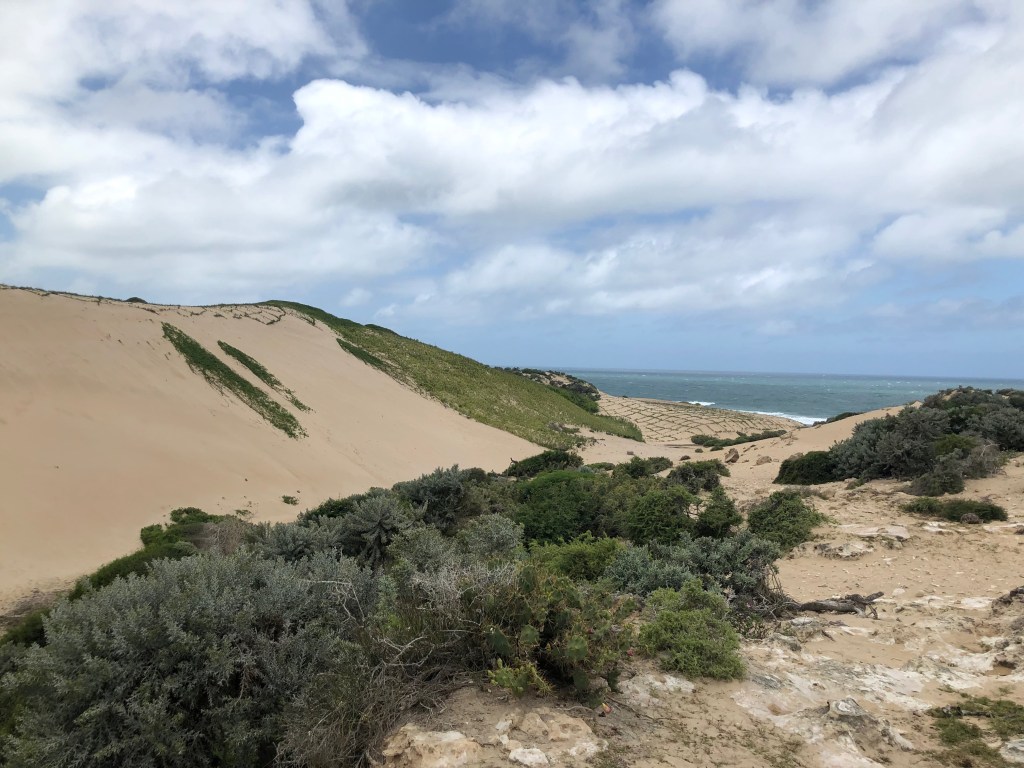
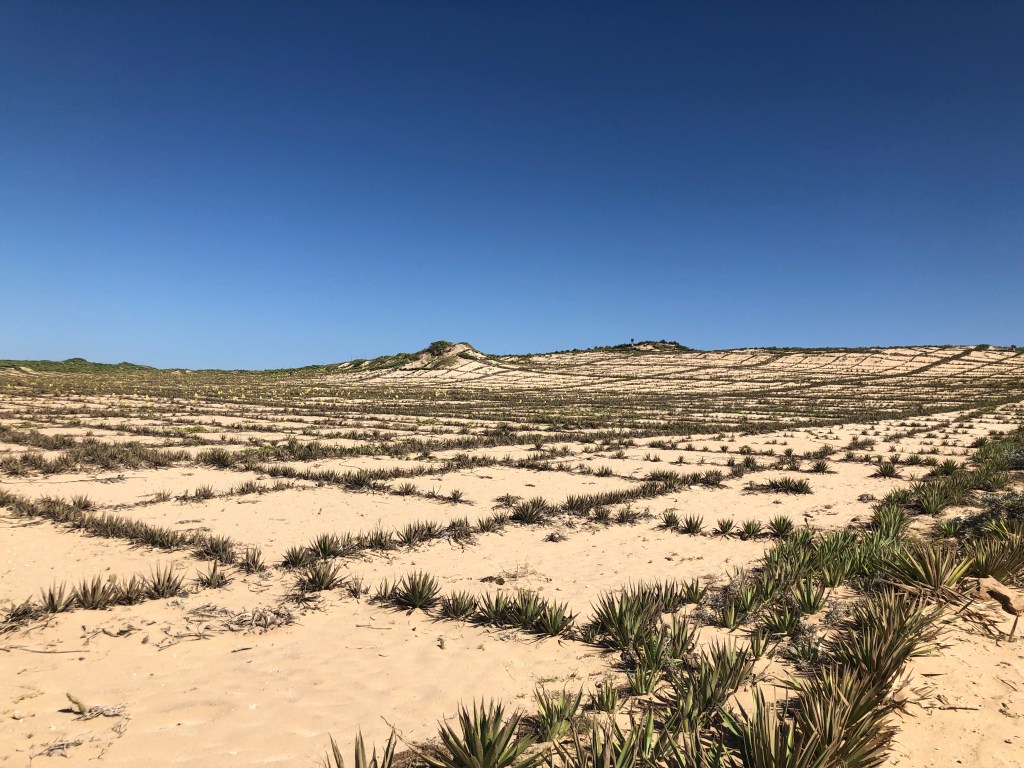
The best solution to these issues is called dune stabilization. The technique employed is simple and extremely effective: planting vegetation on the dunes to fix them into place. You plant at the weakest point of the sand dune- where it is eroding away- which prevents movement inland.
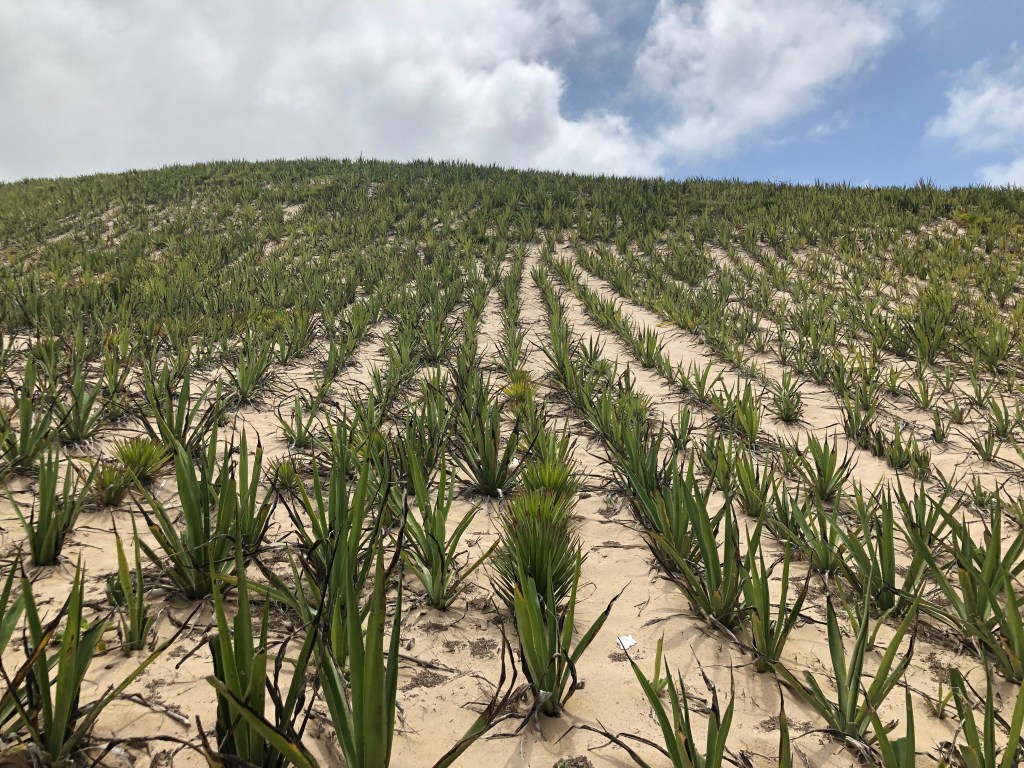
Dunes that have been stabilized (left = mature, right = new)
The Marovato well is located at the base of this sand dune. The coastal (vulnerable) side of the dune has been stabilized and the well is secure for the time being.
Two plant species are used in dune stabilization: sisal
and lalanda (ipomea es-caprea). Sisal is an agave plant common in southern
Madagascar. It is well-adapted to desert conditions and can thrive in poor soil
while enduring drought, strong winds, and significant temperature variations
between night and day. Lalanda is a creeping vine that also flourishes in
desert conditions. Both species grow very quickly and do not need to be
watered, making them ideal species to cover the sand dunes quickly.
CRS has helped organize communities to stabilize sand dunes (over 243 soccer fields of land) using this technique. It is a Food for Asset (FFA) activity, so people get paid in food for their time along with the benefits of protecting their farmland and villages.
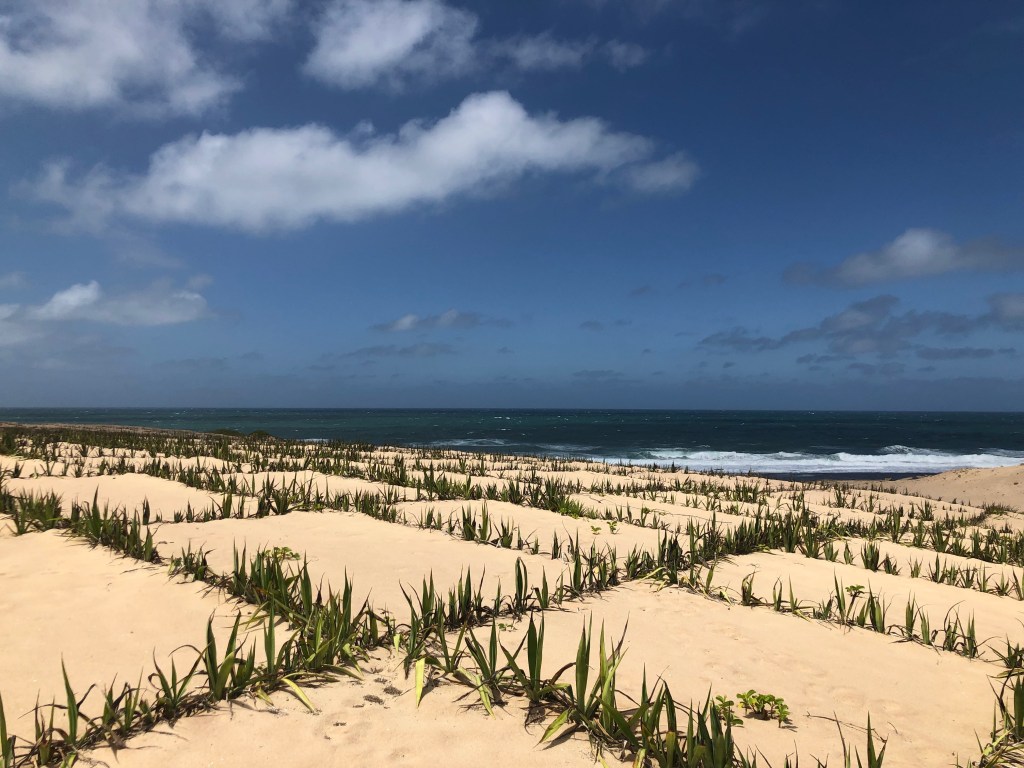
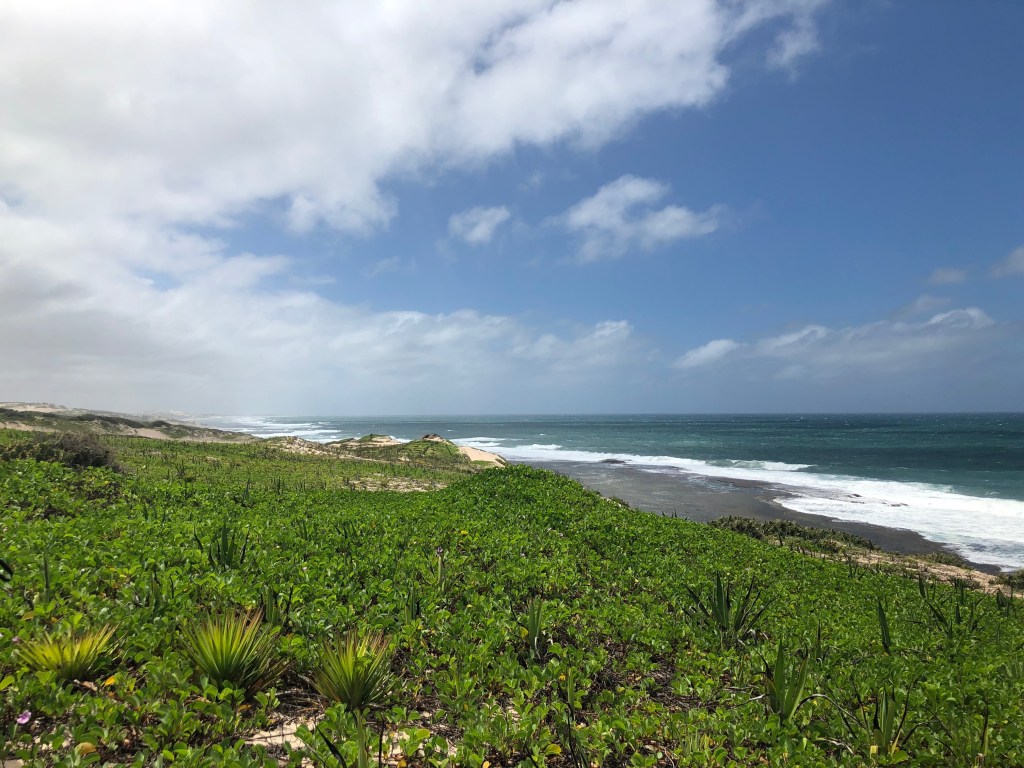
An ideal coastline covered with vegetation, with little sand migrating inland. Also so beautiful!
Standing next to these dunes made me realize the magnitude of the situation. Those coastal winds are strong and never stop, carrying sand in constantly. It would drive me crazy to feel and hear the slow demise of my family’s life. This is probably one of the most important projects that I have visited yet.
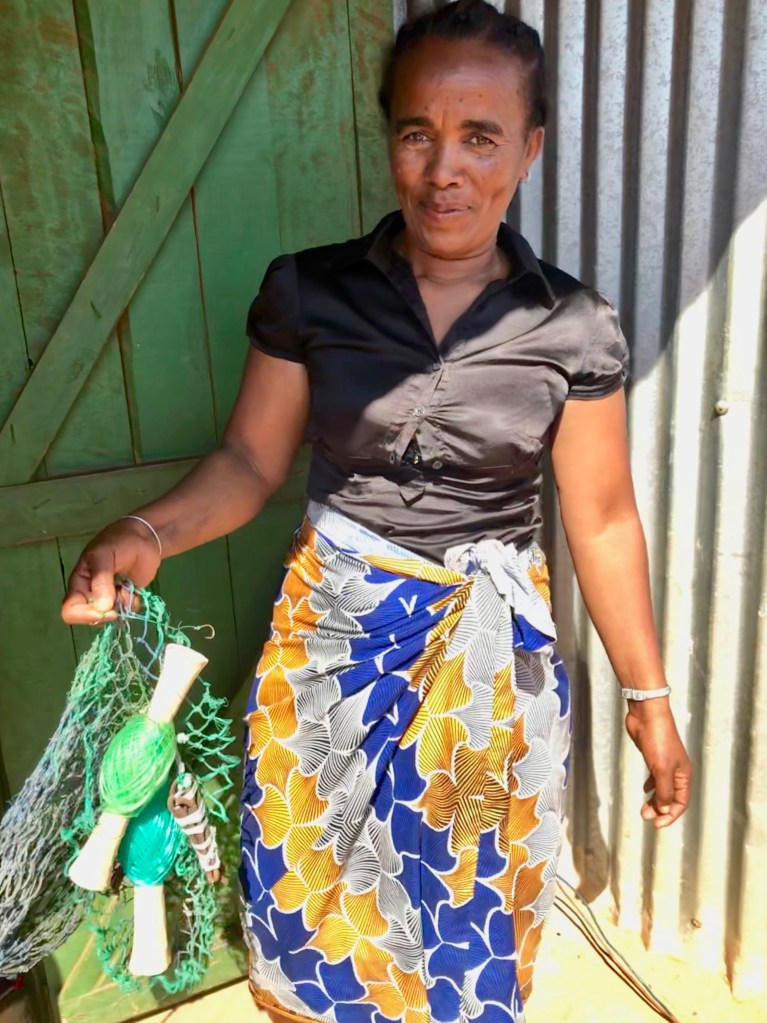
Ravalimahitasoa’s family relies on fishing as their main source of income. Traditional fishing practices in southern Madagascar involve both shallow-water and deep-water fishing. However, shallow-water fishing is mainly used for household consumption and generates little income compared to deep-water fishing. Deep-water fishing requires a boat and specific equipment, making it inaccessible for many families. Before CRS support, Ravalimahitasoa’s family shared one boat with multiple households, making it difficult to bring in enough fish to support her family.Fortunately she was able to participate in fishing fairs in 2018 and 2019, where she received equipment such as nets, extra line, and large barrels. She also received batteries to power lights, which allowed her family to fish later into the night. Using the new equipment, Ravalimahitasoa’s family was able to save up enough money to purchase seven broken boats and repair them. They sold a few and kept the rest to use themselves, greatly increasing the amount of fish they are able to catch.”
– fishing fair success story snippet
I’ve really landed the perfect job here. In a sort-of exchange for being able to observe CRS projects, I’m writing “success stories” about a select few individuals whose lives have been profoundly impacted by a project. It’s been an amazing experience to see their life and document part of their stories. Of course, not everyone has benefited the same way these 7-8 people have. But it is inspiring to highlight them, since the changes reflect highly on their own hard work and resilience. The best part of my week was receiving my first ever live chicken as a gift from one of the women. I was a proud owner for about four hours, before he became dinner.
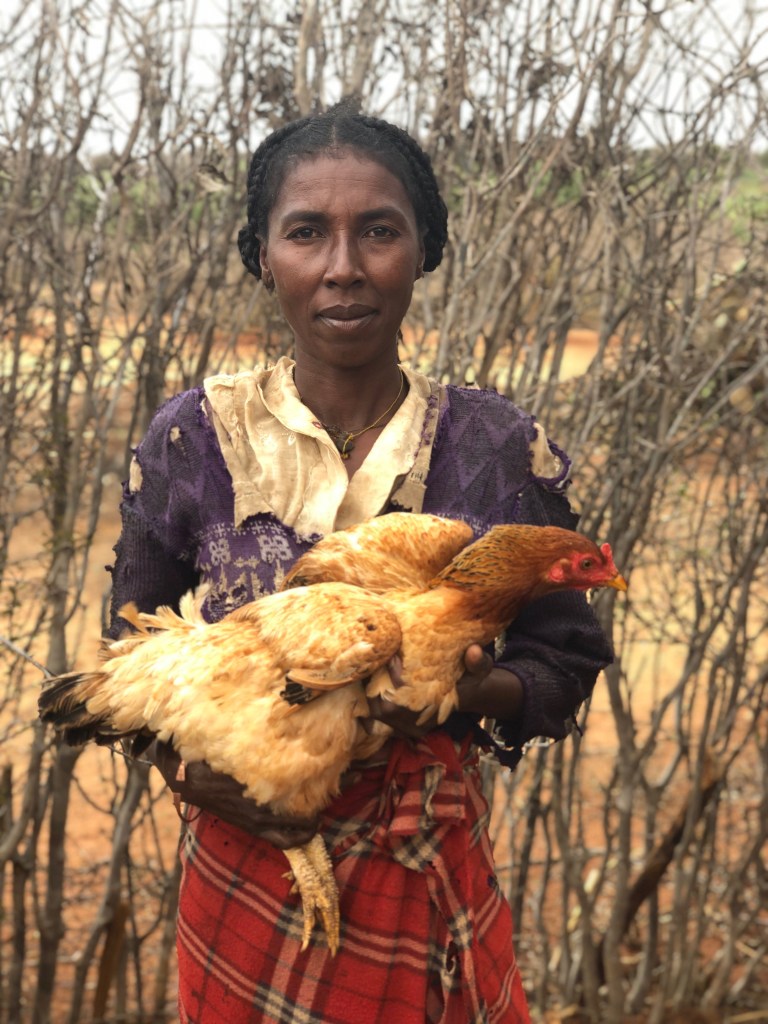
Didike received six chickens from CRS, along with training about how to vaccinate them properly. She was also shown how to build an enclosed chicken coop, which she did so well that her coop is now a model for others in her community. Her coop has grown from six to over thirty, with more chicks on the way. The chickens provide financial security for her family of nine, as well as a stable food source.
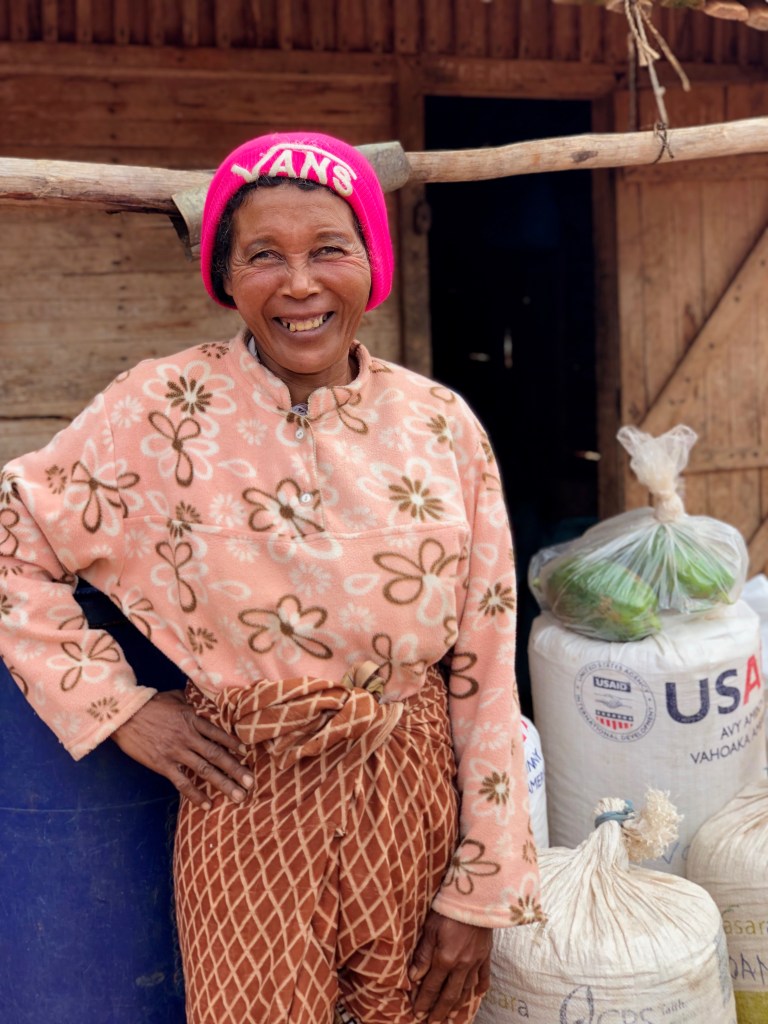
Heremasy is a farmer, as many generations of her family before her. She received PICS bags (shown behind her) which help keep her harvested goods clean and dry. With these simple bags, she is now able to keep her goods for longer and sell them at optimal prices in the market. She is also able to store seeds safely to prepare for each new planting season, and has even begun to sell her seedsto other farmers.
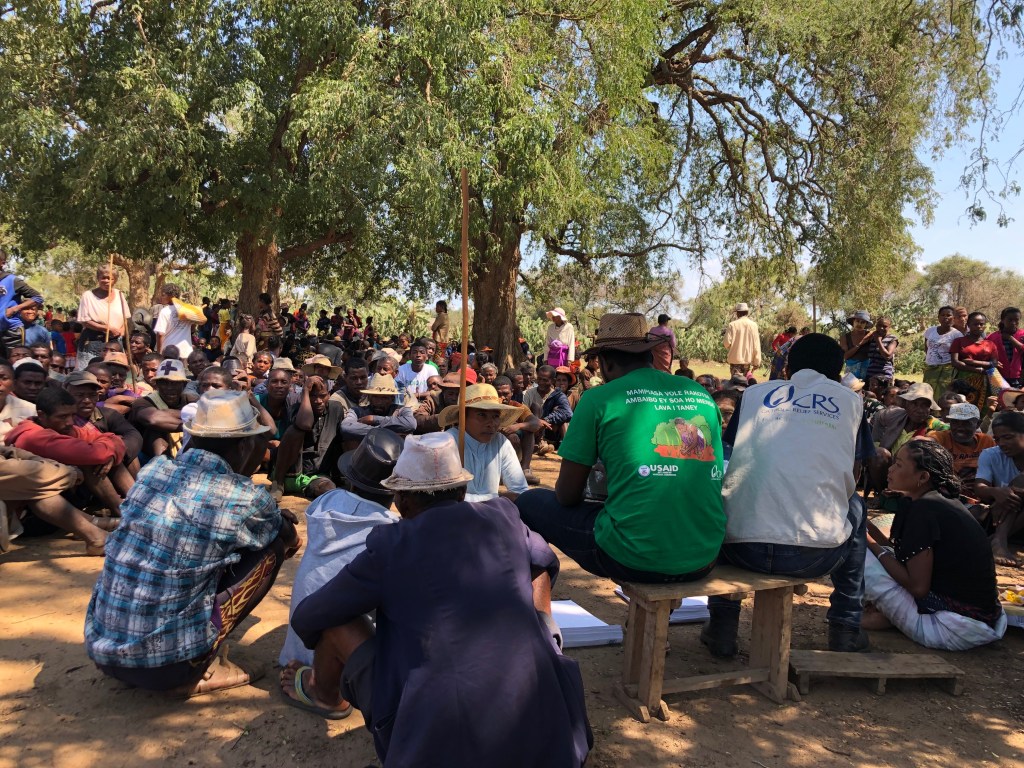
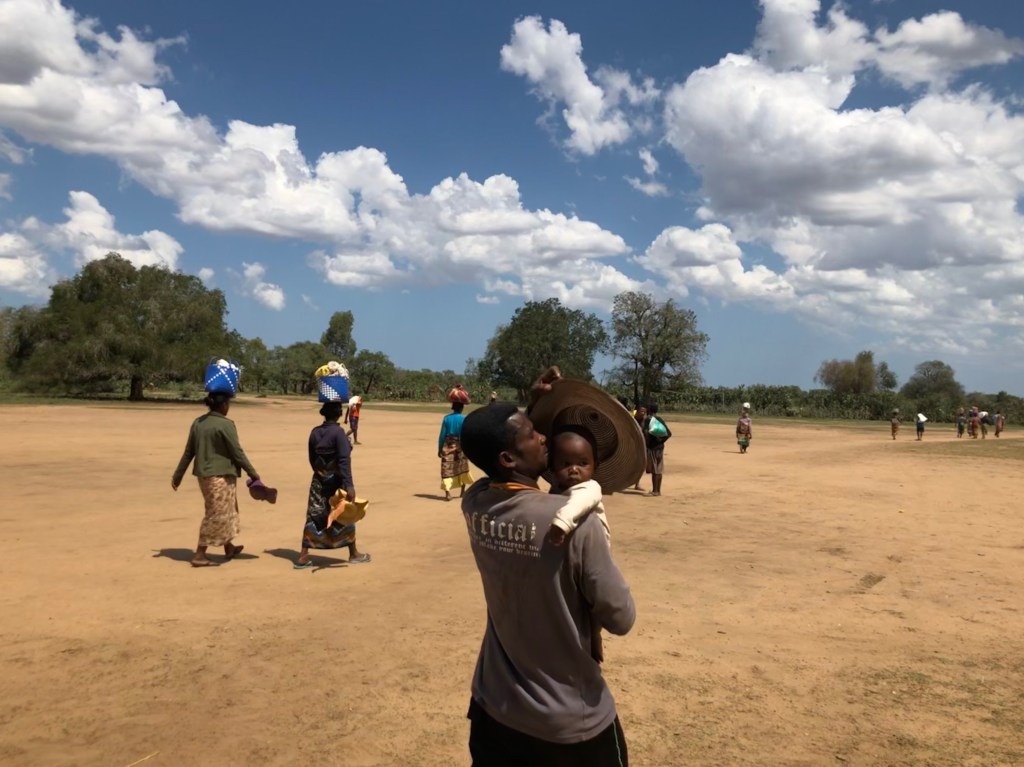
A major program here is called Food for Assets (FFA), which able-bodied participants between the ages of 18-around 60 are able to participate in. They work for 10 days on a project meant to improve their communities and then receive 10 days’ worth of food (sorghum, oil, and yellow split peas). It was extremely humbling for me to see how many people participated, patient through the entire distribution process that I observed, to take home ten days’ worth of food.
Many guidelines govern events like this. For example, there must be shade and water at the site. Mats are provided so most people don’t have to sit on the ground. People shouldn’t be traveling major distances to get to the site. These little things make a huge difference to the people participating and bring the concept of “dignified aid” to life.
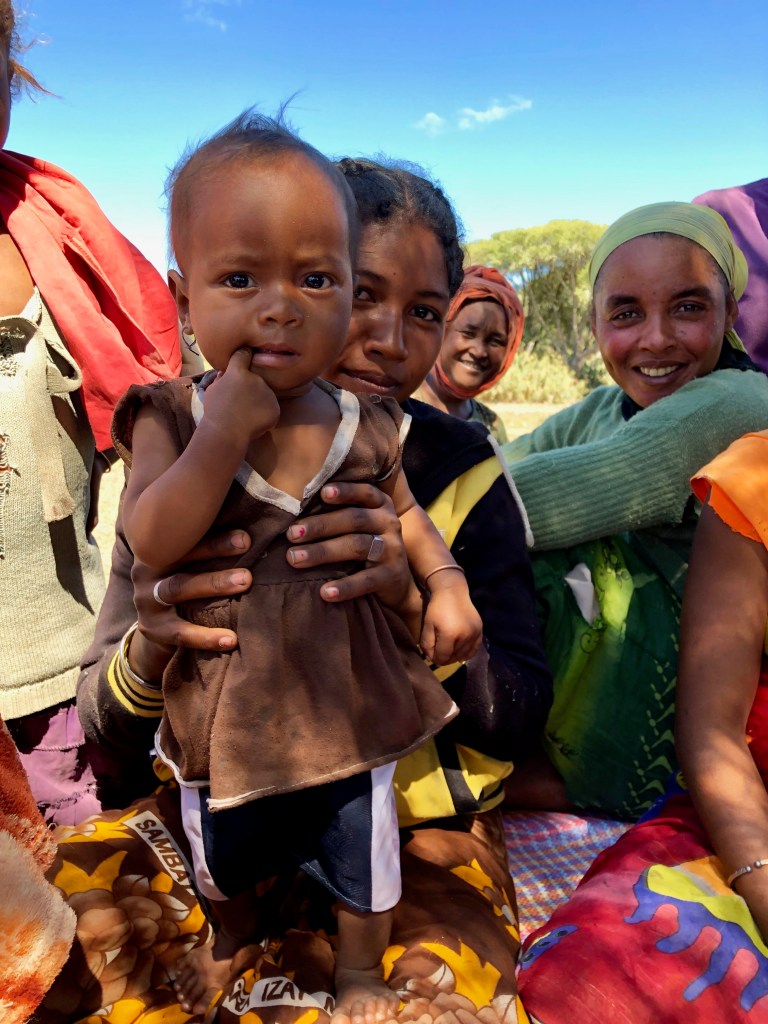
Baby attending the FFA food distribution with mom
I’ve read
enough literature to understand why there is skepticism of aid programs. Last
week I sat in on a conference here with all CRS staff and mayors of the
fokontanys (villages) where CRS works. A major concept throughout the week was,
where does the responsibility lie? If CRS fixes a portion of a road, who will
maintain it once the project is over? There was real dialogue about the issue
of responsibility with an effort to have community leaders educated and
informed about each project CRS has. What I understood is that it’s not
perfect, but efforts are being made.
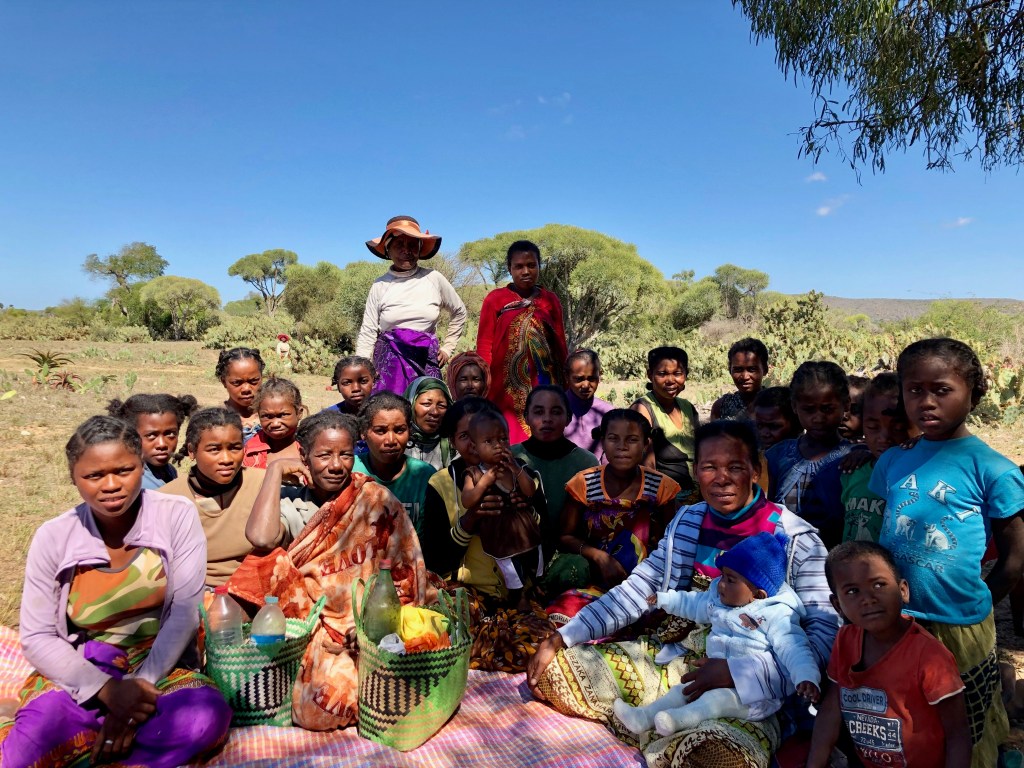
Women waiting for the distribution to begin
I’ll be able to contrast the FFA distribution with a general food distribution (GFD) which will take place in a couple of weeks. While FFA targets able-bodied individuals, general food distributions target the most vulnerable populations- pregnant women, single-parent households, etc. A list of beneficiaries is drawn up by CRS based on certain indicators and then confirmed by community leaders. They take into account ownership of zebu, sheep or goats, or the number of children you have, etc.
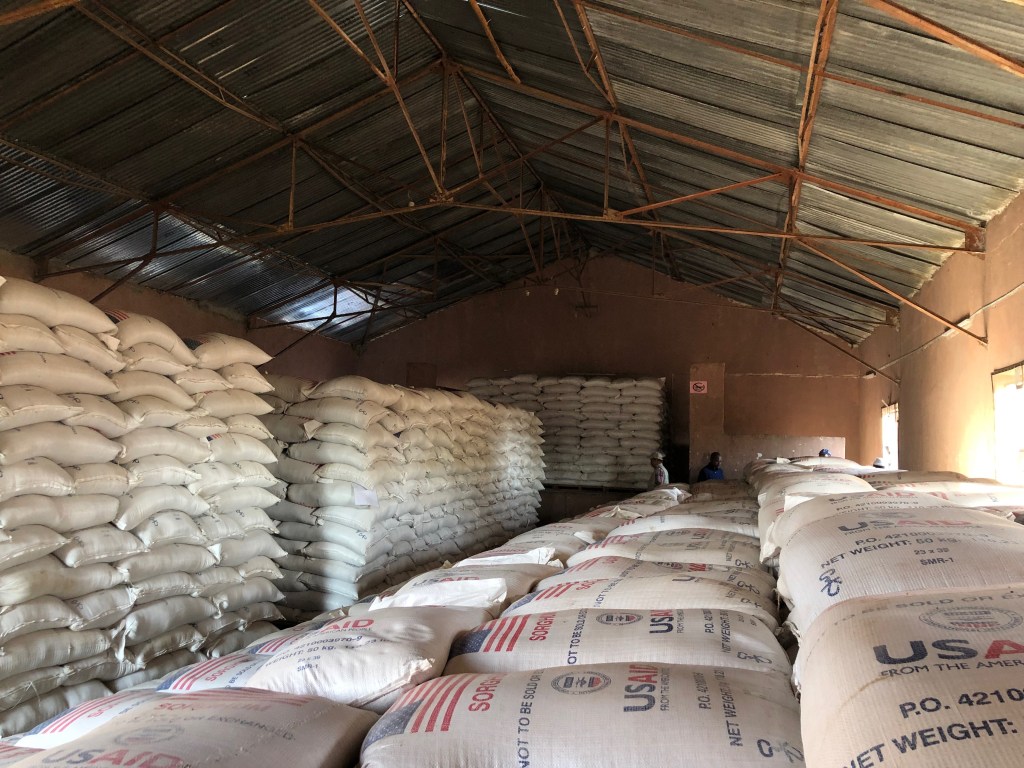
CRS warehouse in Beloha
Also, it’s quite ironic that the people with the longest names in the WORLD can’t pronounce mine (a real email I was given: antsanimarinaramanamjahahary@gmail.com). I’ve taken on the nickname Aly here, so I’m sort-of Aly the success story girl. It’s quite a meme-able phrase among staff down here, used during foos games and other various activities. I hope you all have a moment today where you can say, “success story!!!”
I’ve now spent over a full week in Beloha, in the “deep south” of Madagascar.
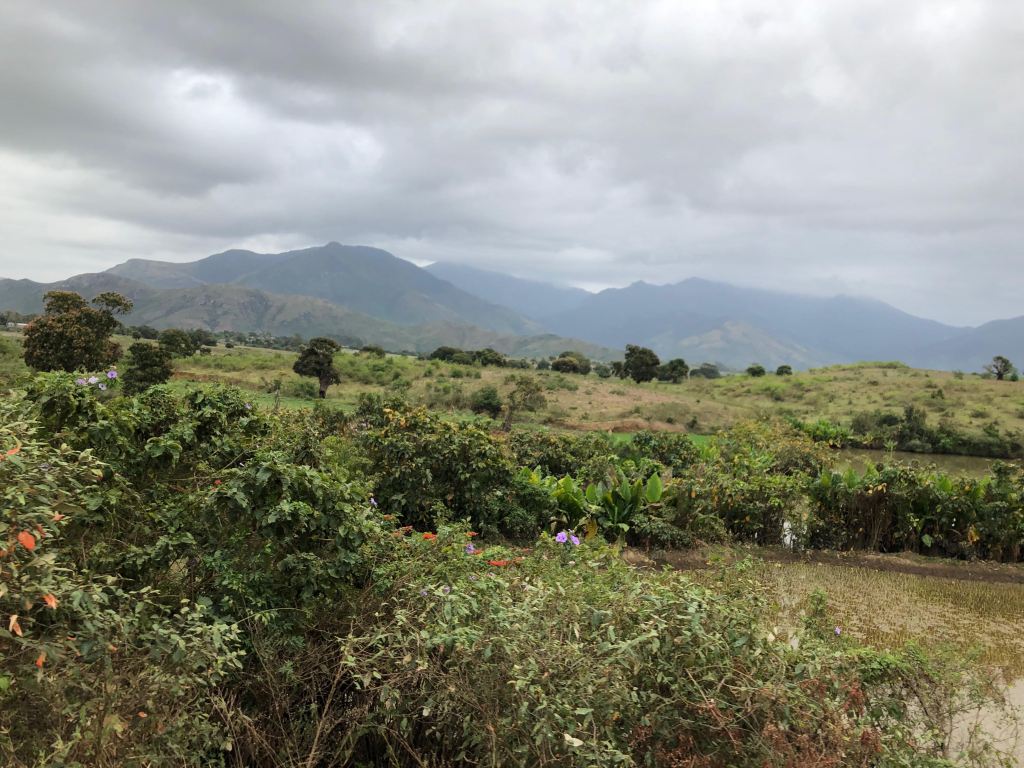
I flew into Ft Dauphin from Antananarivo with other CRS staff and spent the night. Ft. Dauphin is right on the coast and is absolutely beautiful, surrounded by large mountains and lush tropical scenery that somewhat aligns with scenes from Madagascar the movie.
The outskirts of Ft. Dauphin
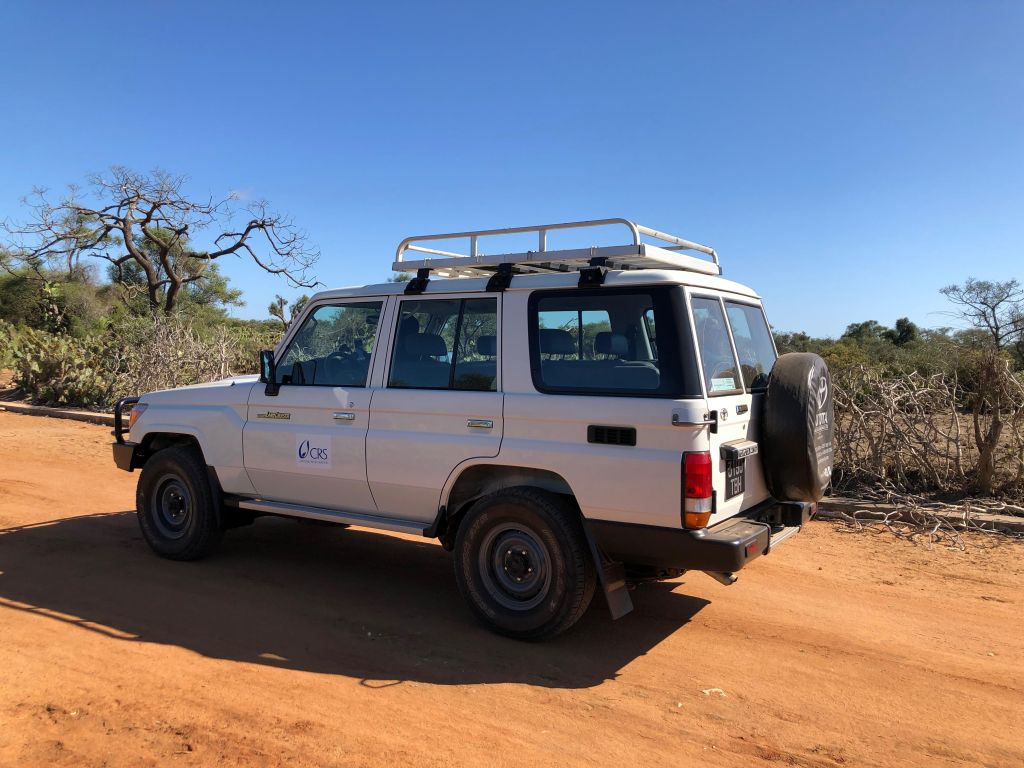
In the morning we began the trek to Beloha, which is not a journey for the faint of heart. We traveled in jeeps that made me feel like we were on a safari, which we may as well have been given how non-road-like the roads are here. To give you an idea of how slowly we drove, or rather bounced, it took us about 8 hours to travel 140 miles!
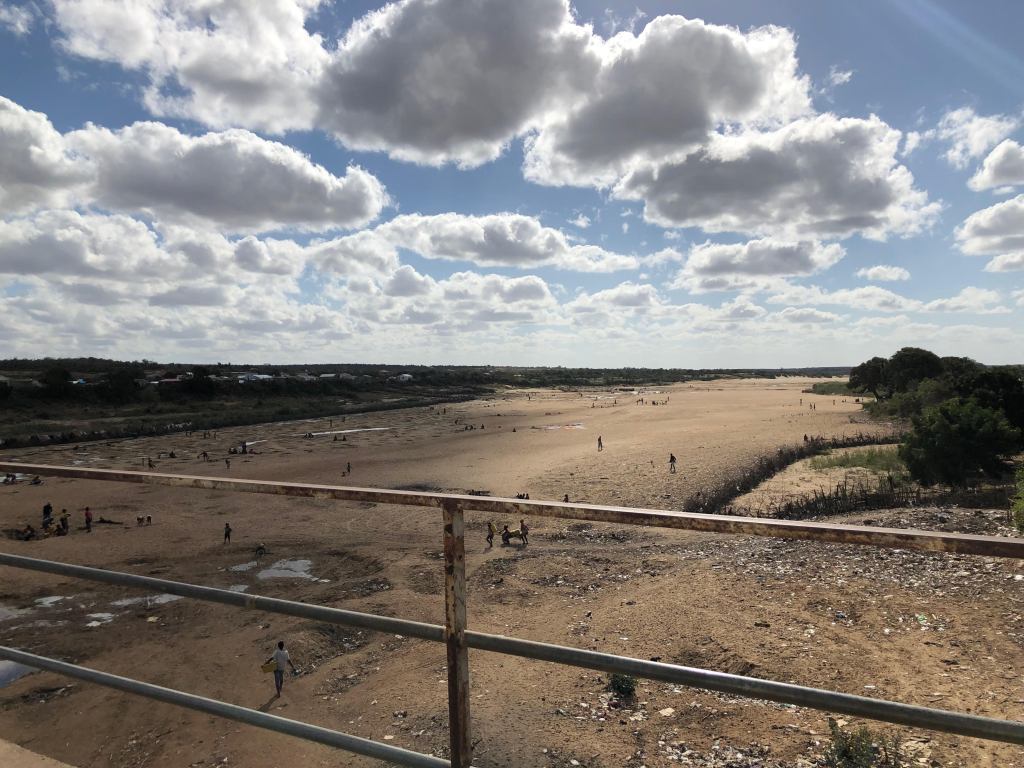
Water supply decreased as we traveled from Ft. Dauphin to Beloha
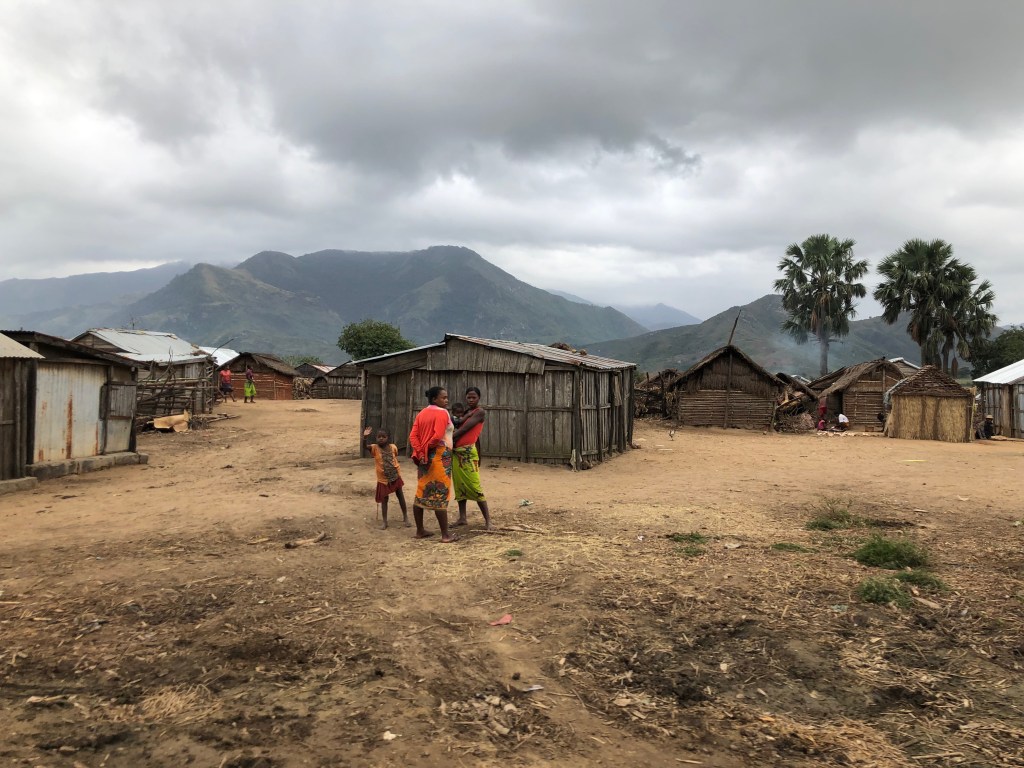
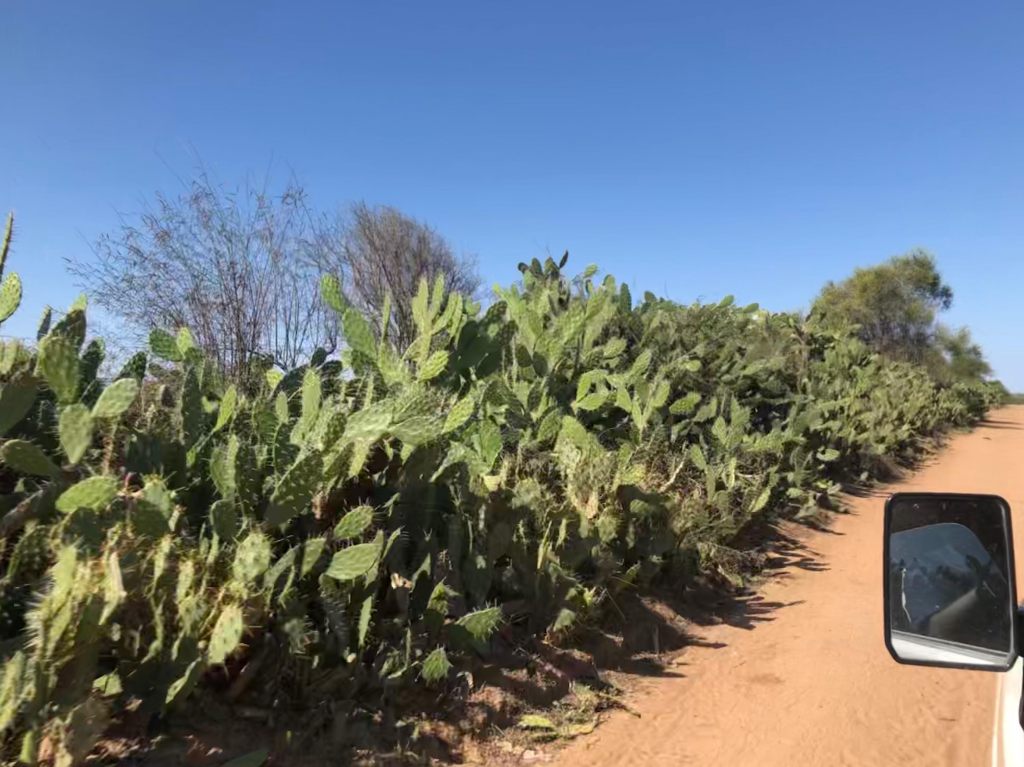
Beloha looks and feels like a little town that popped up in the middle of the desert. Walking down the street is quite literally treading through 6-inch sand. The native ground cover is cactus, which is prolific everywhere it hasn’t been cleared. From what I’ve gathered, there are four species that are edible here. Red cactus is blooming right now, the least desirable, and eaten by locals only when absolutely necessary. The landscape is also dotted with strange Dr. Seuss-looking plants, many of which are endemic to Madagascar, one of the most bio-diverse places on the planet.
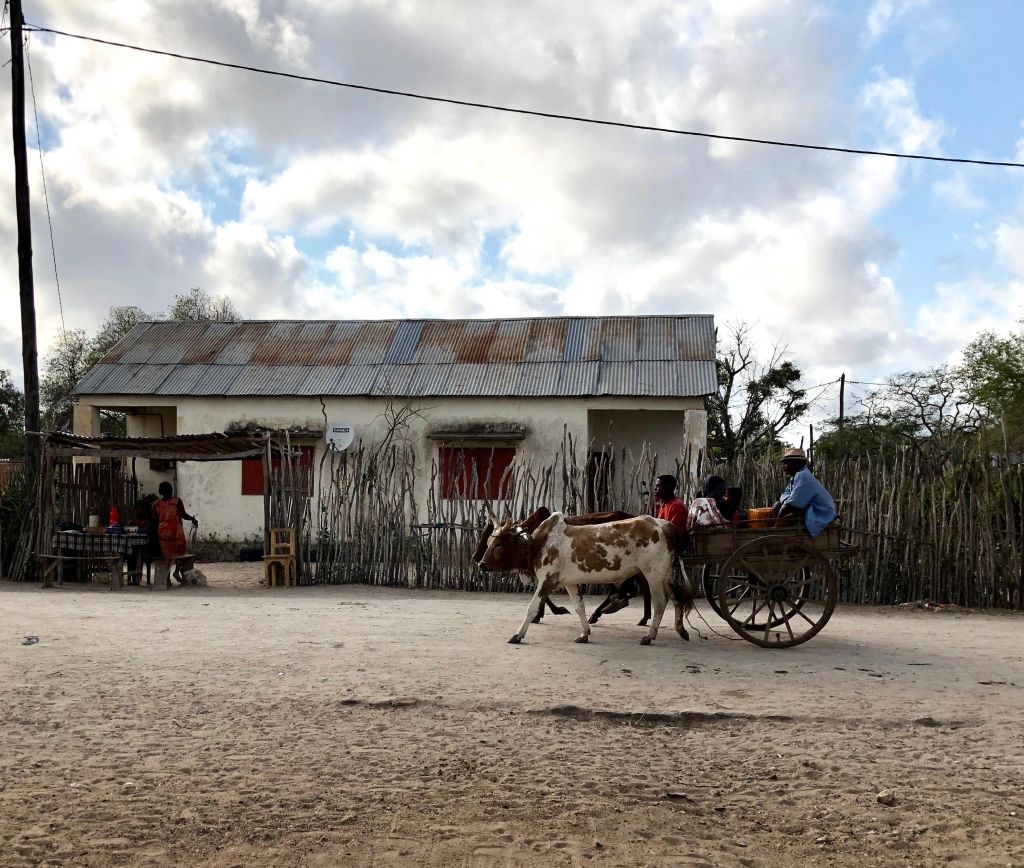
Zebu-pulled cart on the streets of Beloha
The lifestyle here is very different from the capital. A few people have motorcycles, but most walk, ride bicycles, or use carts pulled by zebu for transportation. Zebu are, and have always been, a huge part of the culture here in the south. In many places the roads have two tracks— one for car, one for cart. I’ve only seen a couple vehicles here not owned by an NGO. There is electricity in town, but it goes out for 6-12 hours a day. The streetlights currently don’t work, so when the sun sets it is truly dark and the stars are amazing.
The Catholic Relief Services (CRS) works in this region because it’s been in a major drought for the past 4-5 years, ranging from “stressed” to “emergency” state (IPC 2-4) depending on the time of year. CRS has projects focused on food, agriculture, hygiene, fishing, infrastructure, and more. The CRS workers I have met all work extremely hard and care about the quality of their work. Every day, staff members head “into the field” in jeeps, 4×4’s, and motorcycles to carry out certain aspects of their programs. A surprising number of employees make the long commute from Tana every few months. To generalize, these people are tough and bring an intensity to their work that allows CRS to have a major impact here.
It’s fitting that I have to adapt my diet here, given what I am studying. There are staple foods (beans and rice), and certain vegetables (potatoes, tomatoes, cucumbers, carrots). If you want leafy greens you have to get it on Tuesday (market day), when these huge bus-wagons travel in with goods and vegetables. Fruit is scarce, but if you’re lucky you can find bananas, papaya, and an occasional “coer du boeuf.” The lack of water limits everything you can grow here. It’s been a huge adjustment for me to think of water as a finite substance I can run out of, even just for my personal use. I even get jugs delivered to my door, while outside Beloha people travel sizable distances to get to a water source.
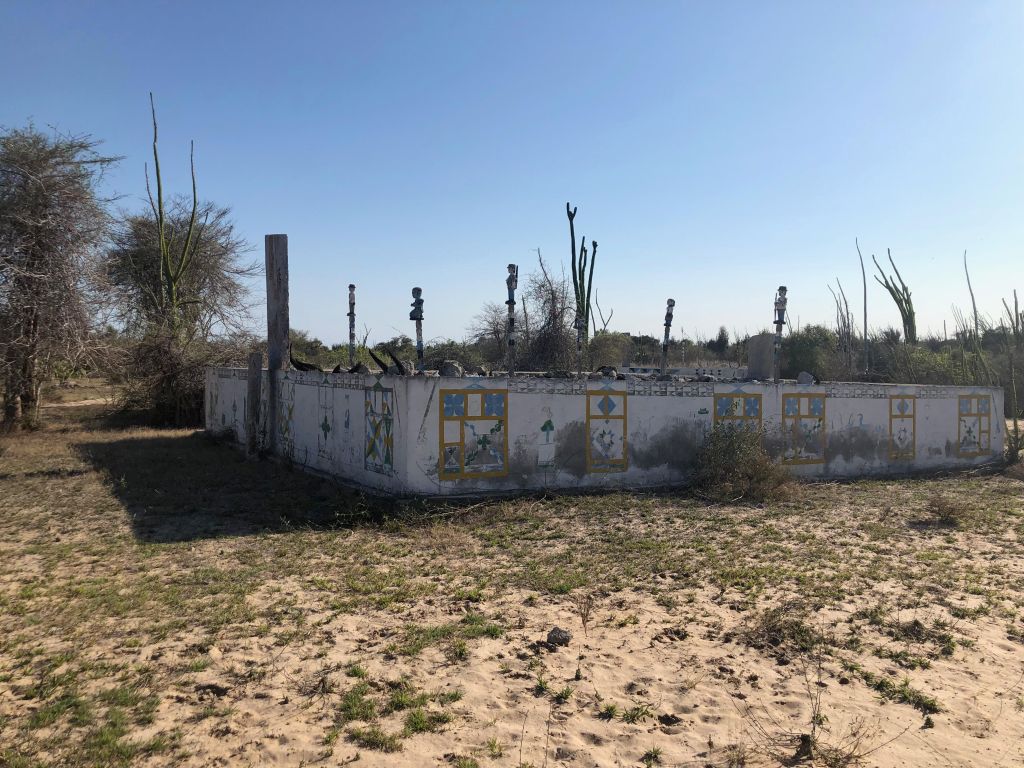
A traditional southern tomb. When a man dies, many (or sometimes all) of his zebu are sacrificed and the family celebrates his life for months.
Between the cattle-pulled carts and lack of running water or internet, it really does feel like I’ve been transported back a century. Even though CRS runs at full speed, the pace outside is slow and calm. I’m living with Catholic sisters in their guesthouse, which makes me feel like Julie Andrews in Sound of Music. Some mornings the sisters feed people in need, so I often wake up to a small crowd in the courtyard. All in all, what an adventure it’s been already.
This past weekend Pope Francis came to Antananarivo along with about 2 million extra people. This caused both mayhem and strange calm, depending on where you were.
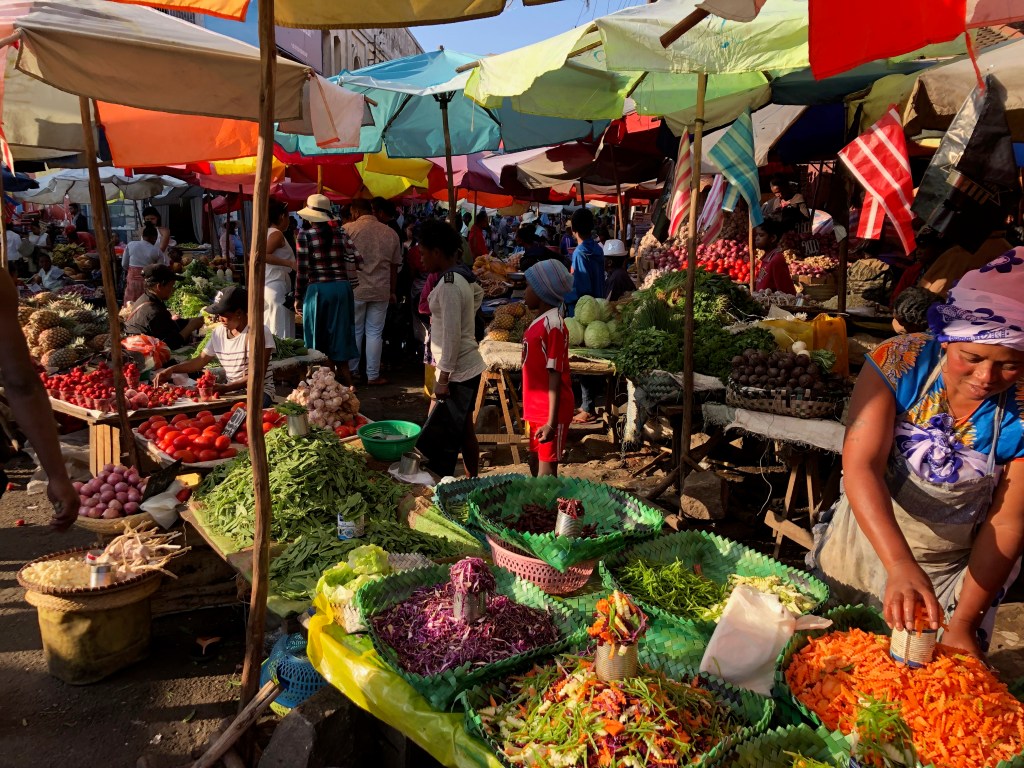
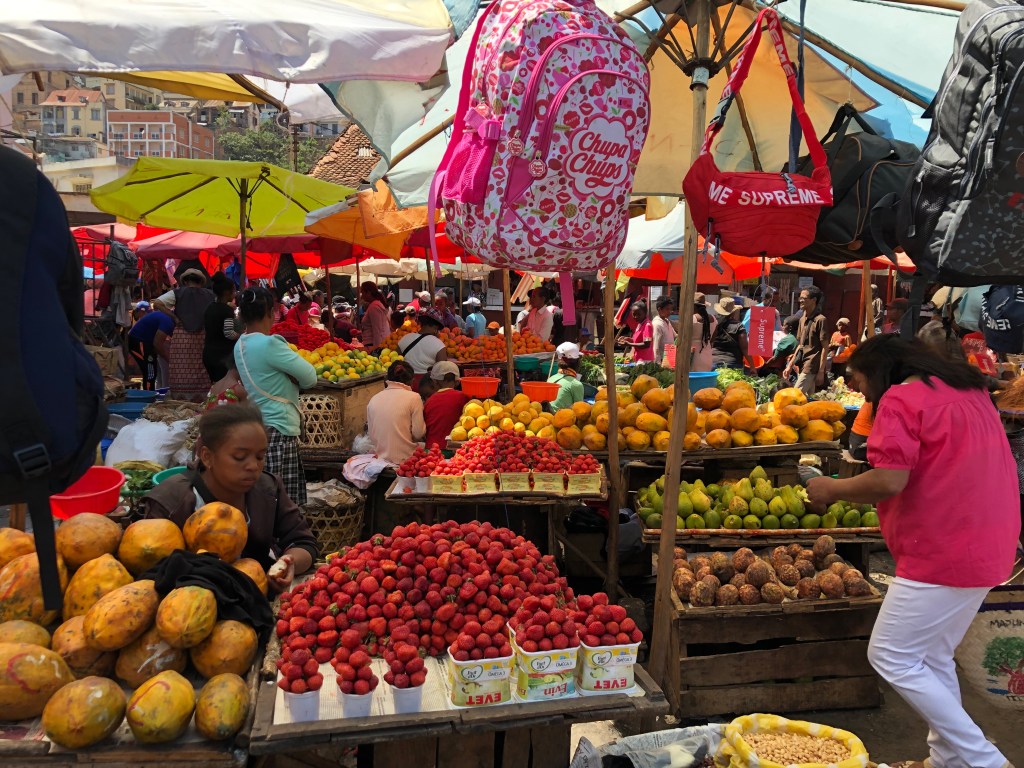
Large food market in the Analakely sector of Antananarivo.
I’m currently volunteering with the Catholic Relief Service (CRS). They have major amounts of USAID funding for food security projects that I’m going to be able to observe and help with over the next three months. I’d heard about the pope’s visit at the office, as a few people were going to meet the pope and attend the mass in a special seating area. I’d also heard about it from my host family- the helper is Catholic, and she was excited for the mass. It was so strange to be a part of both worlds- the one who was privy to the fact that the pope got stuck in an elevator last night for 30 minutes, and the other who would leave for mass at 4 am to get a standing spot among millions of people.
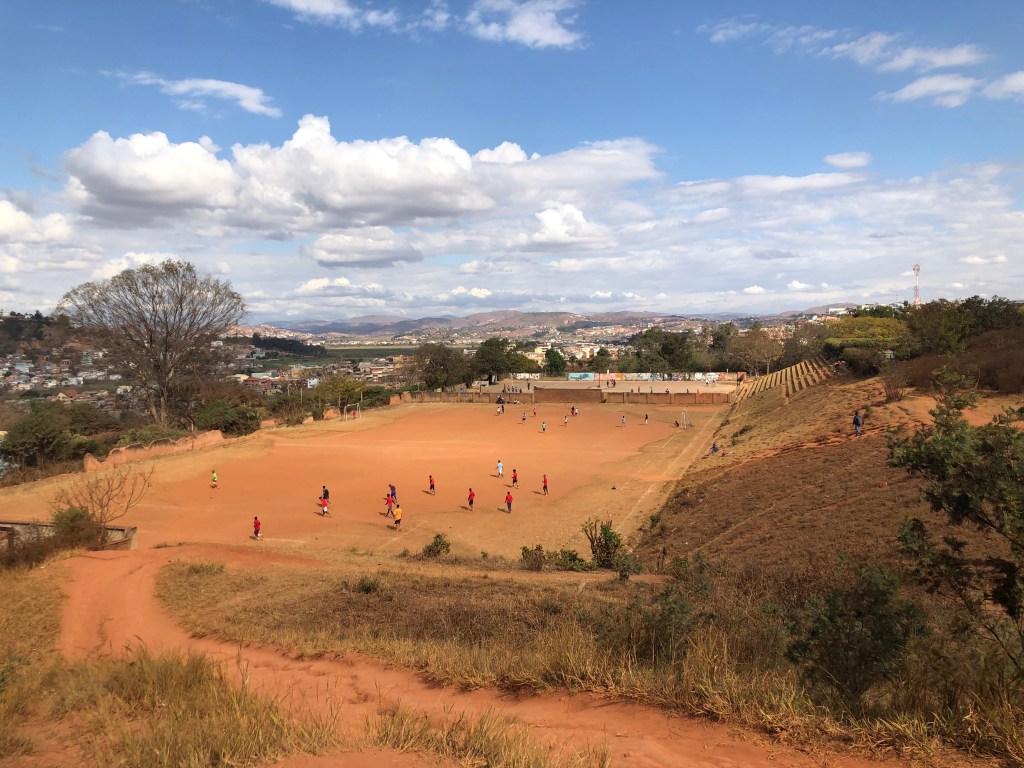
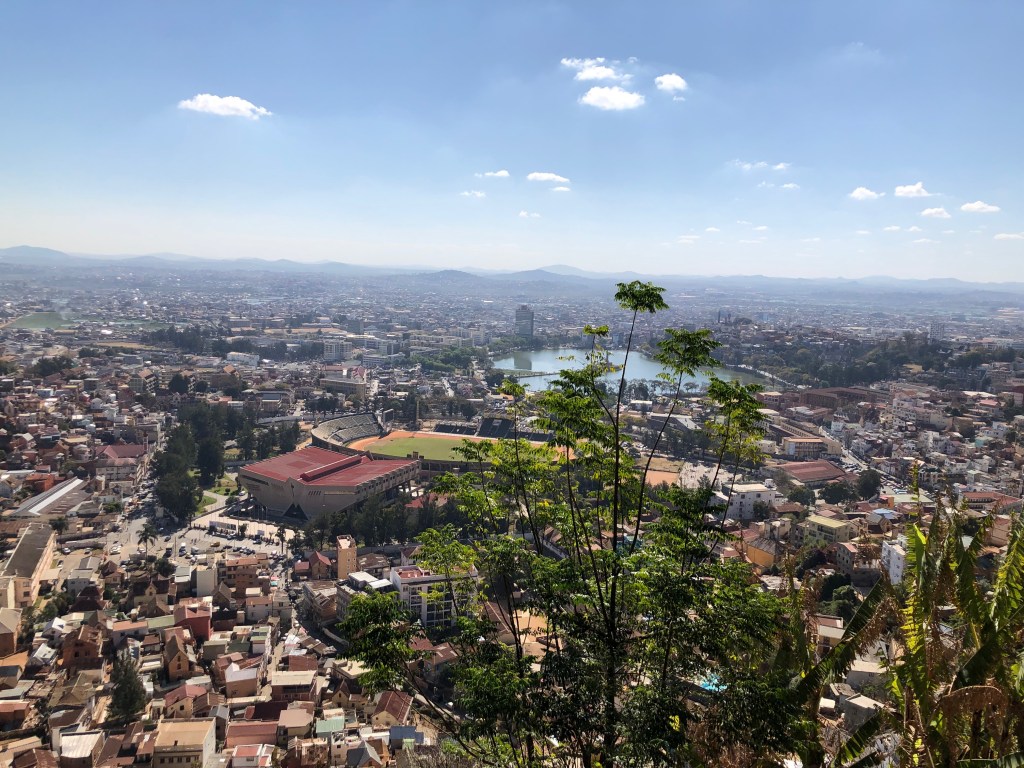
Soccer field at the University of Antananarivo
My temporary desk in the office is with three other friendly people, all Malagasy. They each speak some English and told me on the first day that my presence gave them a good reason to practice. When noon rolled around that first day, they invited me to eat lunch with them. I accepted, but then realized that they all had packed a lunch. Even though I had brought nothing, they insisted that I eat with them anyways. They all opened their lunches and pulled out small portions of carrots in vinaigrette, eggs, seasoned beef, rice, and steamed vegetables. They found me a plate and a spoon, and we all ate lunch from this communal potluck. It was so nice! They do this almost every day and are a close-knit group.
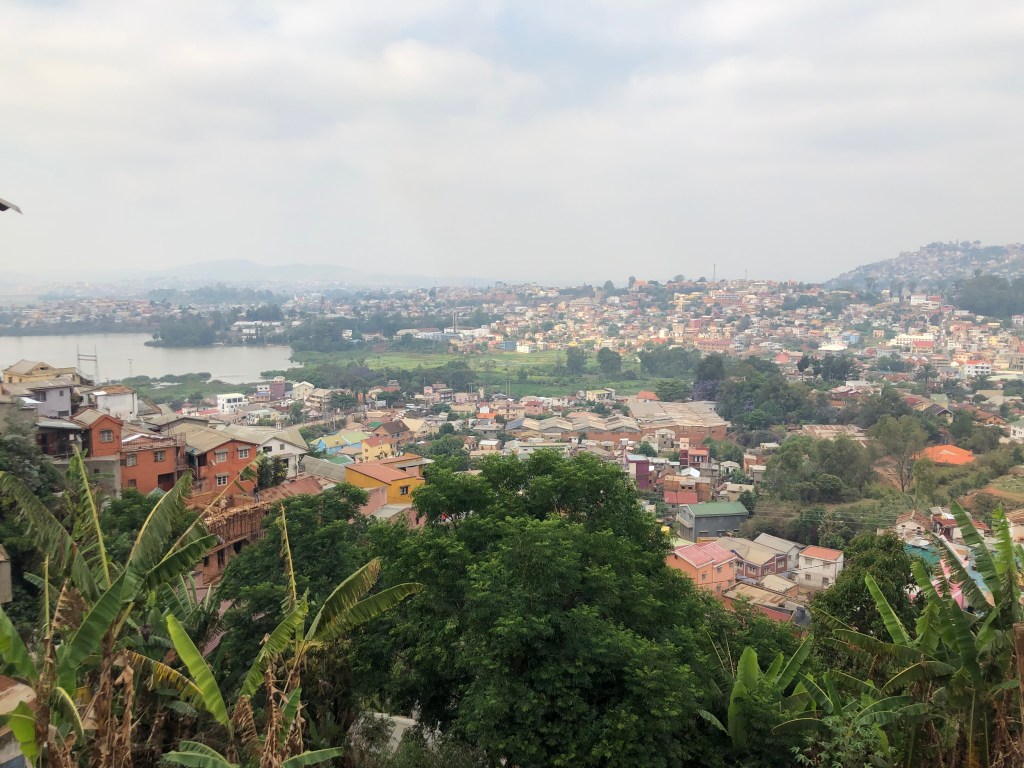
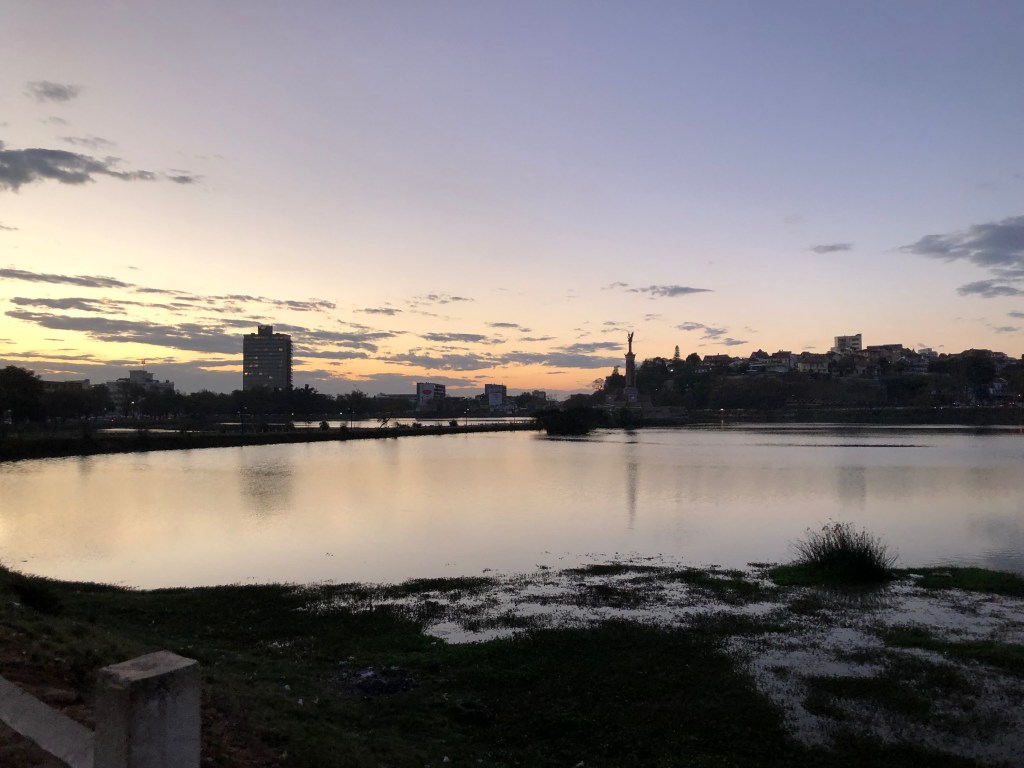
Lake Anosy- a heart-shaped lake in the middle of Tana.
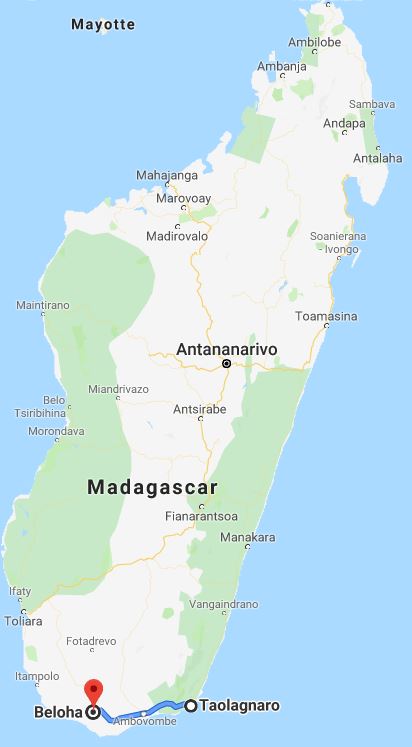
I’m now preparing to transition down to the “deep south” of Madagascar, where I will spend 1.5 months in the town of Beloha (pronounced bell-ua).
I’ll be taking a 1.5 hr flight from Antananarivo to Taolagnaro, then will drive about 8 hours to get to Beloha with other CRS staff. Madagascar is deceptively huge!
Beloha is in the Androy region of Madagascar, which has been in a major drought for over four years. CRS has an office there because it’s a major location of annual food distributions due to emergency-level food insecurity. I’ll be able to help with a food distribution scheduled for early October. I’ve also been tasked with writing “success stories” for specific projects while I’m there. I’ll get to go out with CRS field agents and gather stories about how the projects have altered people’s livelihoods.
I’m super excited for this transition and to share what I learn soon.
Today completes my first week and a half in Madagascar. I
have many thoughts, but I’ll begin by dedicating this post to introducing you
to life in Antananarivo.
The family that I am staying with has been amazing. They picked me up at the airport, obtained my visa for me, carried my suitcases, and have put me up in a room of my own. They feed me three meals a day and have made sure I get everywhere I need to go. The first day they said, “We don’t have much for material goods, but we will share our warmth.” That is really what they have done.
A girl my age is serving as a translator for me within the
family. She is going to the University of Antananarivo and studying English.
She has been an amazing companion on the streets and bridge for me, as the rest
of the family speaks little English. She also has a good understanding for
which things may be new for me and provides thorough explanations.
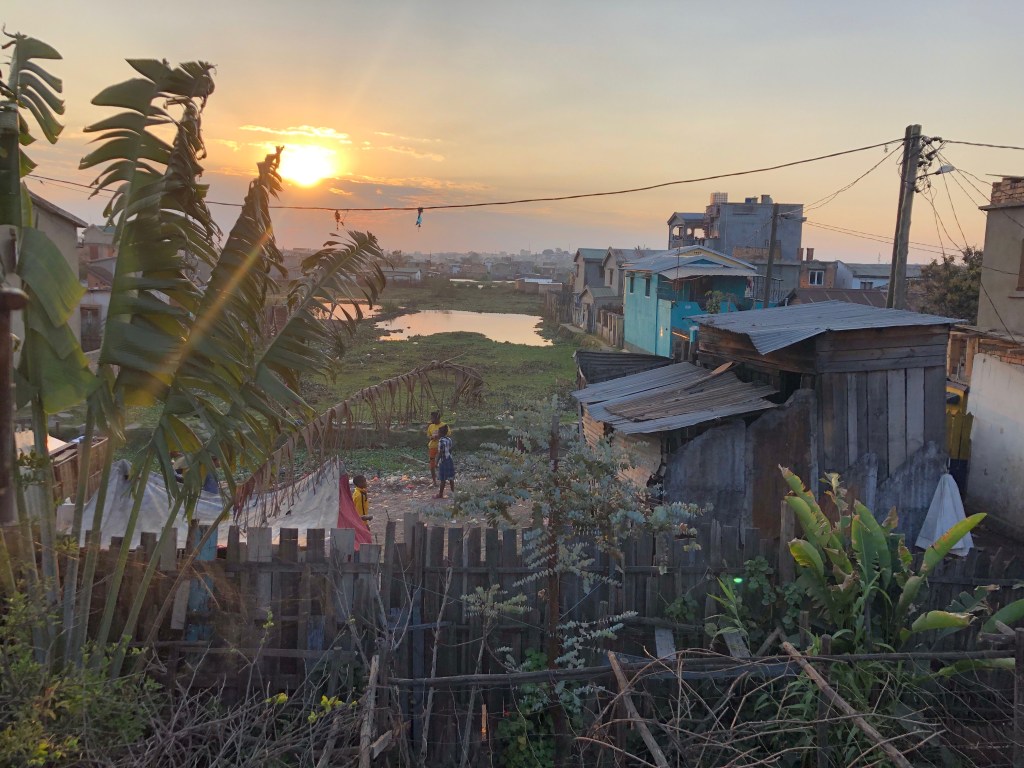
There are certain things that I’ve had to get used to, some of which is specific to the area of the city I am living in, Andavamamba (try saying that three times fast). For example, the water goes out randomly. I learned quickly to check if it’s running before putting a huge glob of soap in my hands. Water is heated on the stove if you want to wash with warm water. The fact that this house does have running water is a luxury which not all have. 20 feet from the house there is a station for those without to fill jugs, which is busy all day. Most homes use charcoal for cooking. This smell, along with burning of trash, I have quickly grown used to. The family has a “helper,” a girl who lives in the house. She hand-washes our clothes, does the dishes, shops, and cleans.
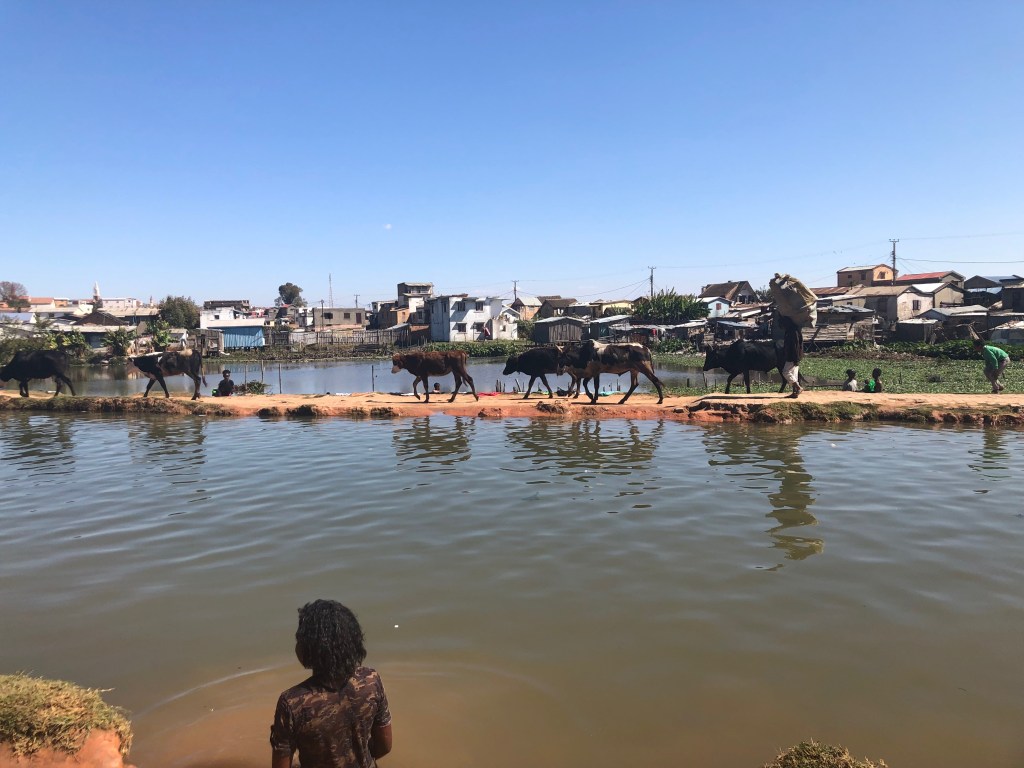
Cattle being herded through the neighborhood.
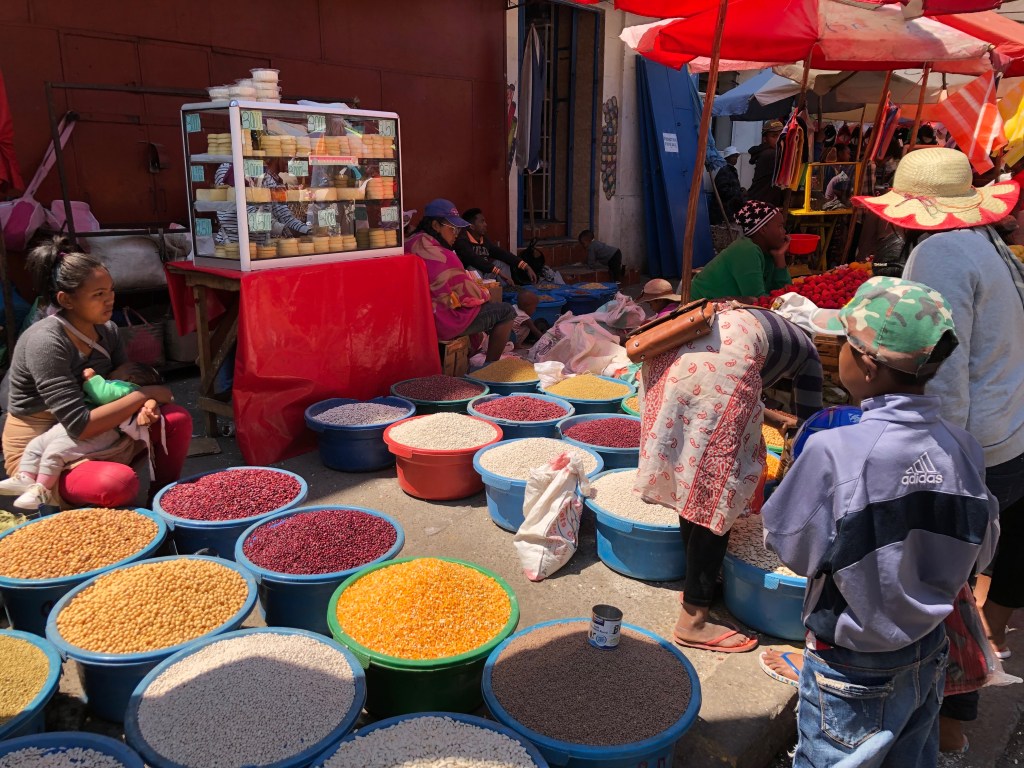
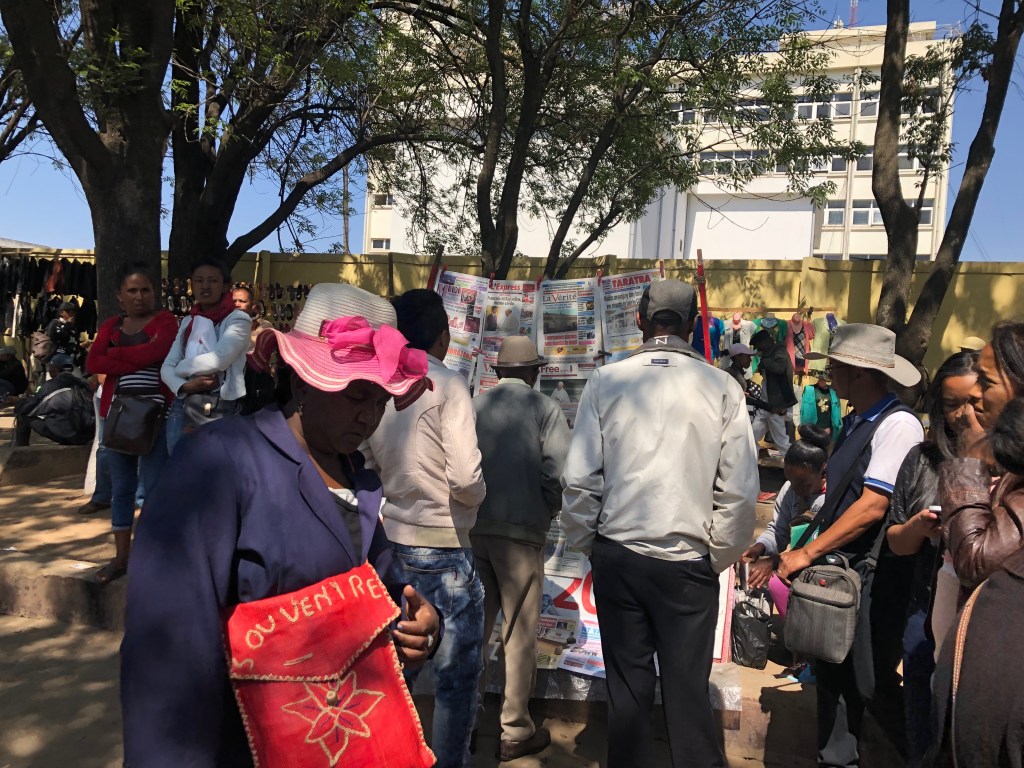
I could sit and observe the streets all day. There are endless tiny stands selling anything you could ever need: vegetables, grains, seafood, crafts, clothing, bricks, charcoal. There are also stands for any service you may require. Need to know your weight? For 100 Ariary you can stand on the scales owned by the woman down the street. Need to print something? There’s a printer stand down the road, where they can also put songs on your phone. You can get your nails filed and painted, or your clothes sewn. Newspapers hang on clotheslines at certain corners and crowds gather to read the headlines. You pass cars, busses, motorcycles, bicycles, hand-pulled and even cattle-pulled wagons. These same cattle are also loose and herded through the streets around where I live. Rice fields can be seen in low areas between neighborhoods. This is the first place I have been in a long time without seeing people with cellphones in their hands at every spare moment.
A small crowd gathers to read the daily headlines.
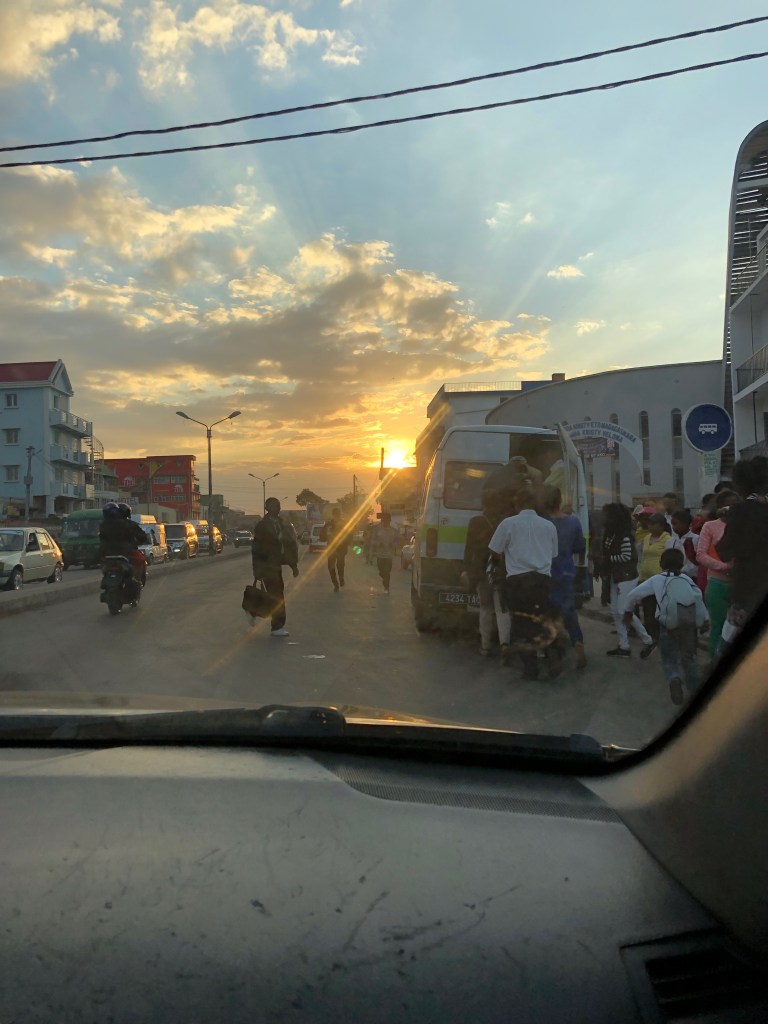
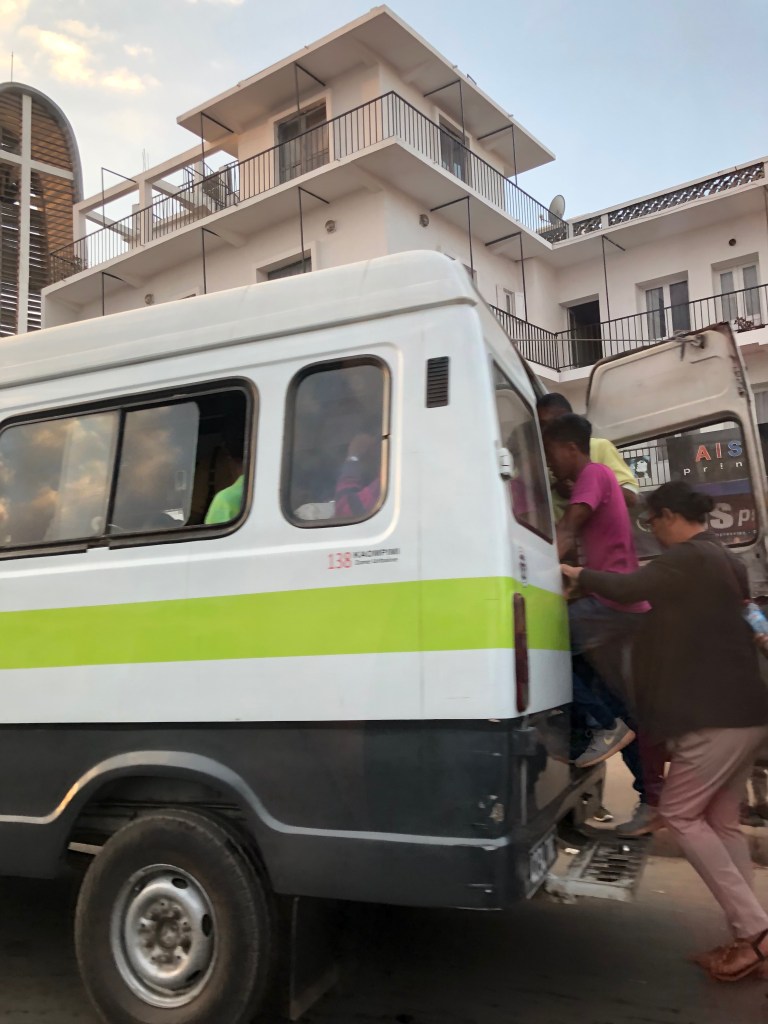
The public busses are 15-passenger vans that get packed full. You flag one down in the street and enter and exit through the back doors, which are almost never fully closed. A young boy mans the back doors and takes your money, jumping in and out as it moves through traffic. It costs 500 Ariary, which is about the equivalent to 15 cents. My host told me that this is too expensive for many people, as 90% of people in Madagascar live off under $2 a day. I find them so comfortable that I’ve fallen asleep on long commutes across the city.
I have to be very watchful over my personal belongings, as in any foreign country. Madagascar is known for having high rates of petty theft that have been increasing. Foreigners get a lot of attention on the streets, especially where I live. It is something that I am getting used to. Besides the stares, I even got gently poked once as I passed by someone! Yes, sir, I am made of flesh like you. The family is constantly advising me when to put my backpack on front-ways, when to keep a hand on my purse. I’ve been learning how to balance this concern with trust and enjoyment. For the first time in my life I always know where my cell phone is, a skill that I hope stays with me forever…
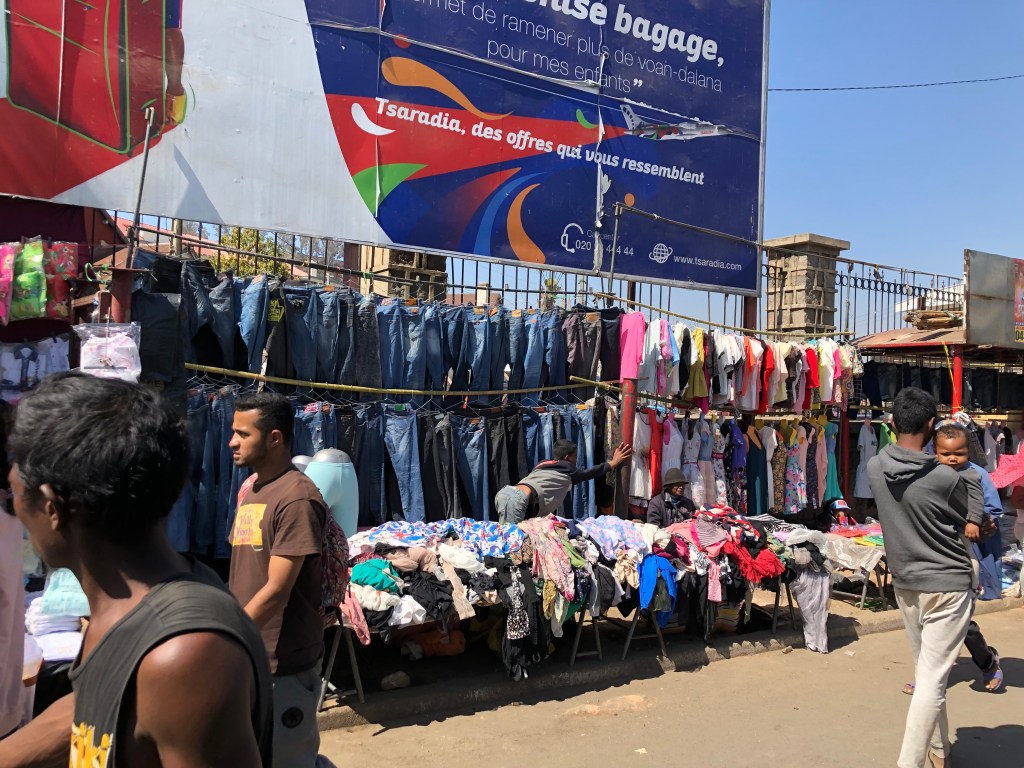
Used clothing shops like these are on every block. Most of the clothing is second hand and from the USA, so recognizable logos and sports emblems walk past me all day.
I wake up to the sound of roosters and children. There are kids everywhere: swaddled up and napping next to their mom’s fruit stand, toddling around with their siblings, running in packs. Running even faster are the chickens. They are quick, fearless things with long legs. There is so much life around me that I don’t have time to feel lonely. I’ve loved getting accustomed to this place and am excited for the next three months of learning.
As I’ve been settling into this year I’ve gotten a slow start to writing. I’m now in Madagascar but will begin here by recapping the first destination of my trip: France. I was there for exactly one month and all my work was done in Paris.
I chose to go to France because it is known as a global leader for food security initiatives. In 2016 they passed a law requiring all supermarkets over a certain size to donate excess food or face a fine of roughly $4,000 upon each failure to do so. This law has been shown to be working: over 2,700 supermarkets have donate over 46,000 tons of food each year. The publicity around the laws has raised consumer awareness about food waste as well. By 2025, France hopes to decrease its food waste by 50%.
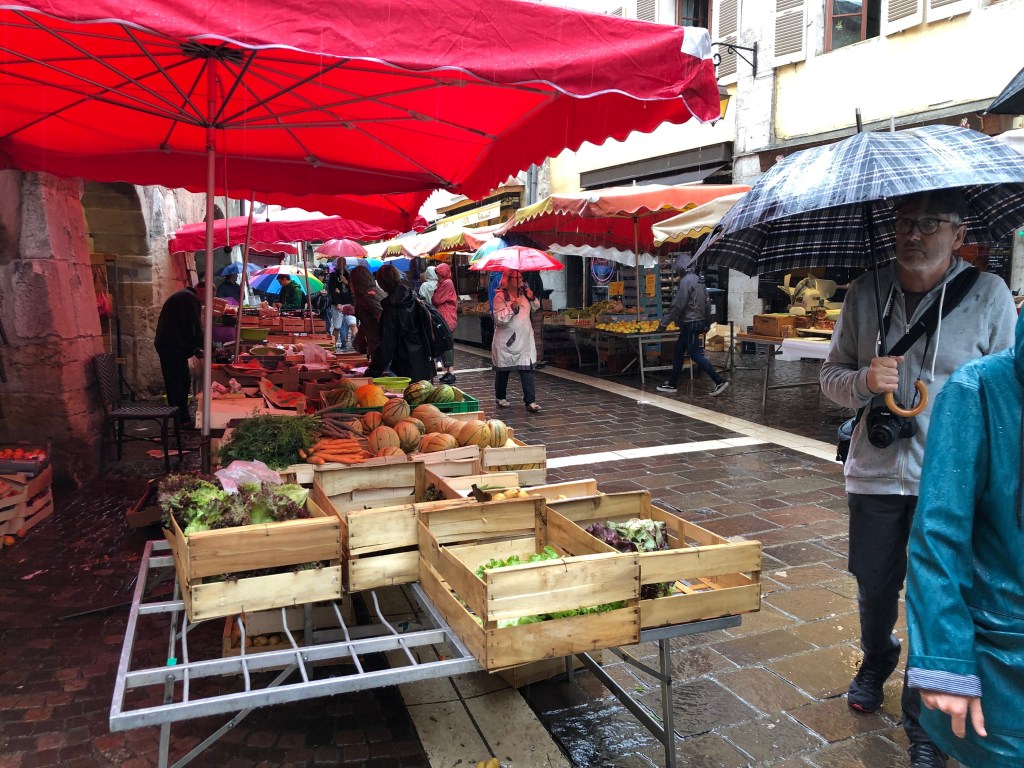
Outdoor produce market in Annecy, France.
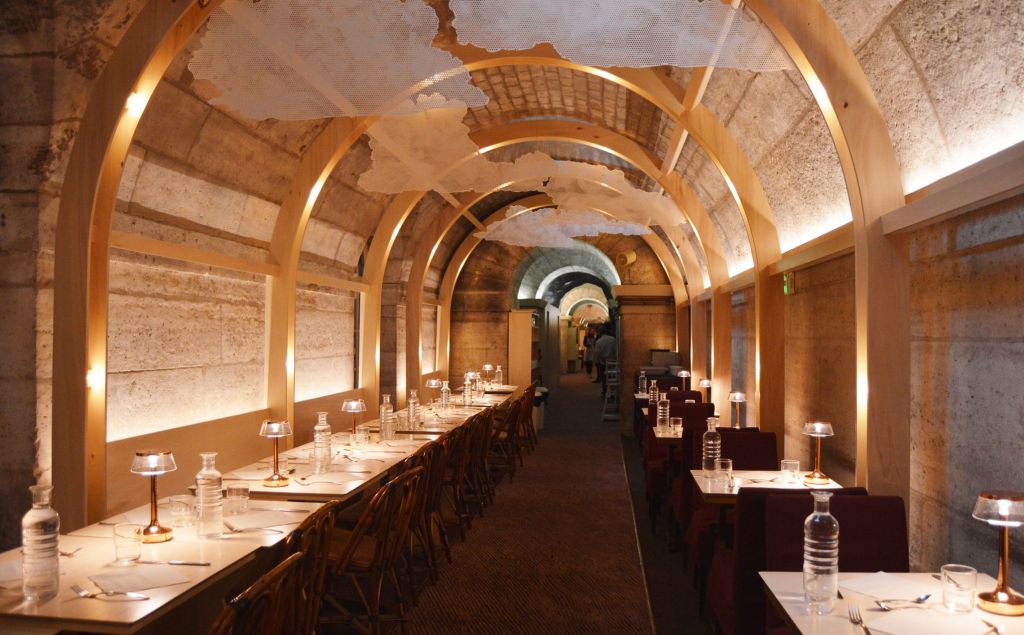
Paris has some beautiful solutions to providing food to those in need. One of my favorites is called Refettorio Paris: Food for Soul- a restaurant in the crypt of the famous Madeline Church that serves dinner for people in need. However these aren’t just meals—these are three-course meals prepared with excess food by some of France’s most renowned chefs. Guests are welcomed into a comfortable space and are waited on by staff in this effort to improve social integration.
Besides this refettorio, there are about a dozen other Solidarity Restaurants in Paris that provide food with the same goal in mind. There are also numerous apps that alert Parisians of nearby businesses with excess food near their closing time- reducing food waste and helping consumers find cheap food. Then, of course, there are NGO’s that provide major amounts of food all over the country. While in Paris I met with two of the four largest food distributors in France: Le Secours Populaire and Les Restos du Coeur.
In 1987 the European council began what is today known as the FEAD (Fund for European Aid to the most Deprived). Four major organizations in France benefit from this, including Les Restos du Coeur and Le Secours Populaire. This grant provides critical funding for all of these organizations and was the first thing discussed during my meetings with each.
Les Restos du Coeur (Restaurants of the Heart) is a major food aid organization in France and among the most popular with 72,000 volunteers, 450 employees, and over 2,000 centers. It serves over 180 million meals a year within the country. They distribute food through grocery programs and also provide hot meals at centers and mobile food trucks. At certain centers, cooking courses are offered. In addition, they run a Gardens du Coeur program. In 45 gardens they employ those in need of work and send the produce to their distribution centers. Les Restos du Coeur also reported that their supermarket donations increased from 25,000 tons in 2014 to 45,000 tons in 2018, attesting to the benefit of the 2016 food waste laws.
Similarly to Les Restos du Coeur, Le Secours Populaire receives food through the FEAD grant, supermarket donations, and purchases. I visited a busy branch that serves about 60 families each day. To become eligible for their grocery program, each case is assessed by a social worker who then allots a certain amount of food for six months. After this time, the situation is reassessed. The managers specifically stressed how important it is to provide food that is culturally appropriate for their diverse group of beneficiaries found in Paris.
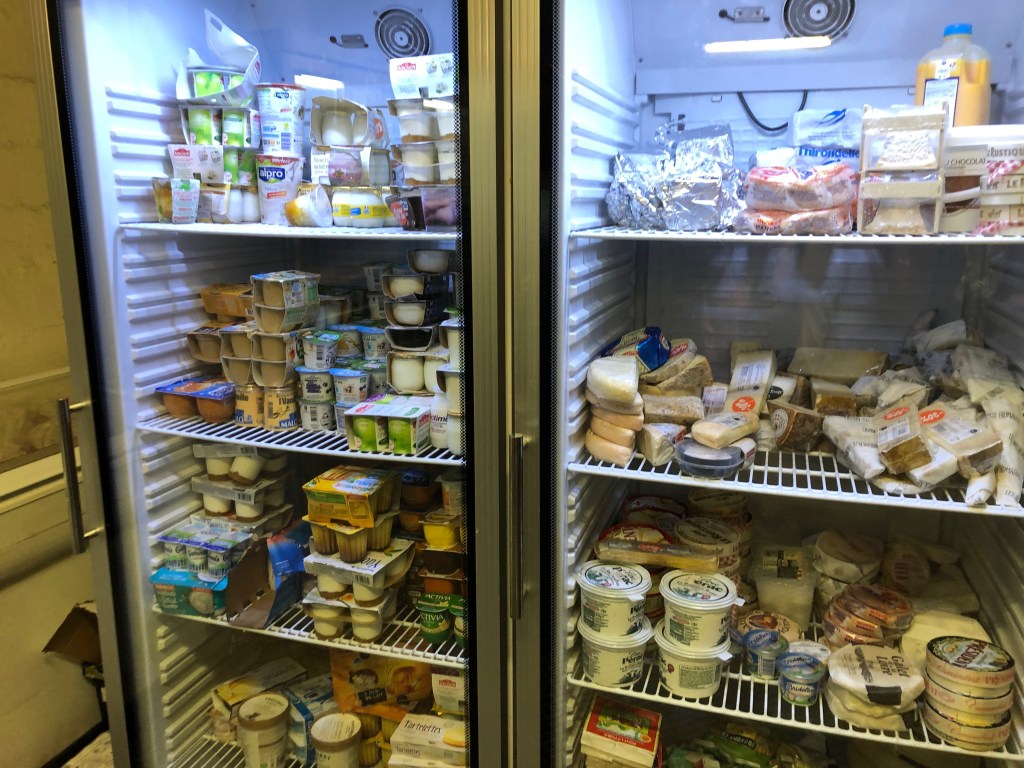
Cheese and dairy selection at Le Secours Populaire. This was the only photo I took to respect the privacy of those at the establishment.
Both organizations also meet critical needs beyond food. Le Secours Populaire assists with housing placements, scheduling doctor’s appointments, and even provides a fixed mailing address for those without. In their centers I saw people leaving with clothing, cooking utensils, baby formula, diapers, and soap. Les Restos du Coeur helps with job searches and provides employment opportunities in their gardens, warehouses, and professional kitchens. They also provide leisure activities to improve social integration. These comes in the form of movie tickets and even vacation funds.
It was inspiring to see how committed both organizations are to providing their services in a way that are dignified for the recipients. “Because a meal is not enough,” to quote Les Restos du Coeur. Both organizations strive to fulfill basic needs while incorporating social integration and making people feel empowered to take charge of their situation. These factors are being increasingly prioritized across the globe in many organizations and I think they will have a profound effect.
Behind the scenes…
There was lots of cheese, tradicion bread (even better than
a baguette, according to locals and now me), and mini saucissons. The Paris
metro was extremely easy to navigate and I used it everyday to explore the
city. You know how seeing Mt. Rushmore in person is basically the same as on a
postcard? I’d say the Eiffel Tower is just about the opposite.
Before embarking, I thought of France as my “easy”
destination. I had planned to be there for about a month and to visit many
different organizations to get an overview of what they do and how they
operate. I was also hoping that opportunities to volunteer would come up as I
met with people.
I learned very quickly that I shouldn’t expect anything to be “easy.” I had unfortunately timed my visit with French holiday. Many businesses were closed and neighborhoods boarded up as people were on extended vacations, since they have a 5 week minimum for vacation time (lucky!). Organization directors and managers who were best suited to discuss the work were away and wouldn’t be available for weeks. The organizations that were open were operating with a partial staff that was extremely busy continuing their operations. Of the dozen organizations that I wanted to visit, only two were able to receive me during this time. I was so bummed by this. For the first two weeks I worked every day to find more. I kept hitting dead ends. When I was successful, the process would move too slowly for my time frame. In the end I just had to accept that it was OK to manage with what was working out. I learned a ton from the orgs I did visit and was able to read about the others and plan my coming months.
At the end of my trip I took some time to travel around with a visitor as well, getting to spend a few days near the Alps and another few in the French Riviera. Overall it was a wonderful month getting used to orienting myself to being in a foreign place. There is much more of that to come. Au revoir, France!

 foodnations.travel.blog